
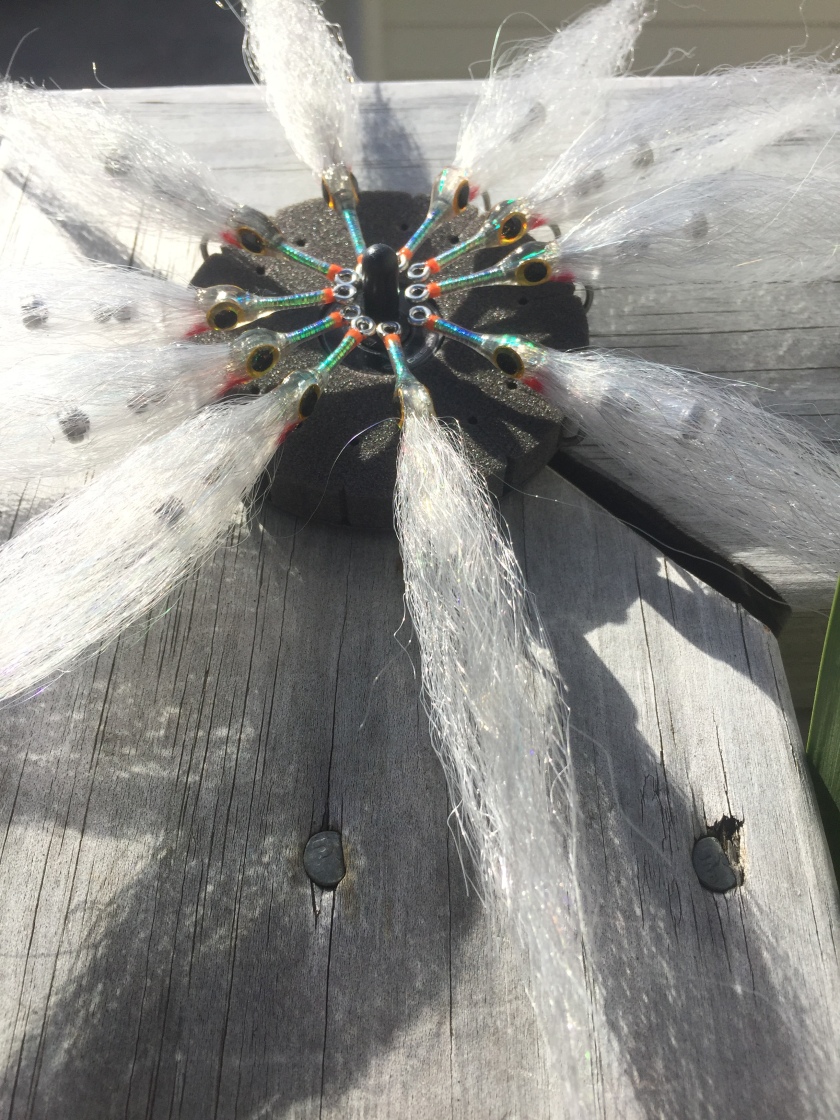
Another essential fly for targeting Kingfish on top water. The humble crease fly with a few twists. Check out Manics article below on a few key construction points and how to fish it. www.manictackleproject.com/king-tide-salt-fly-rattle-popper/
Tag: salt fly
New rig finally gets wet

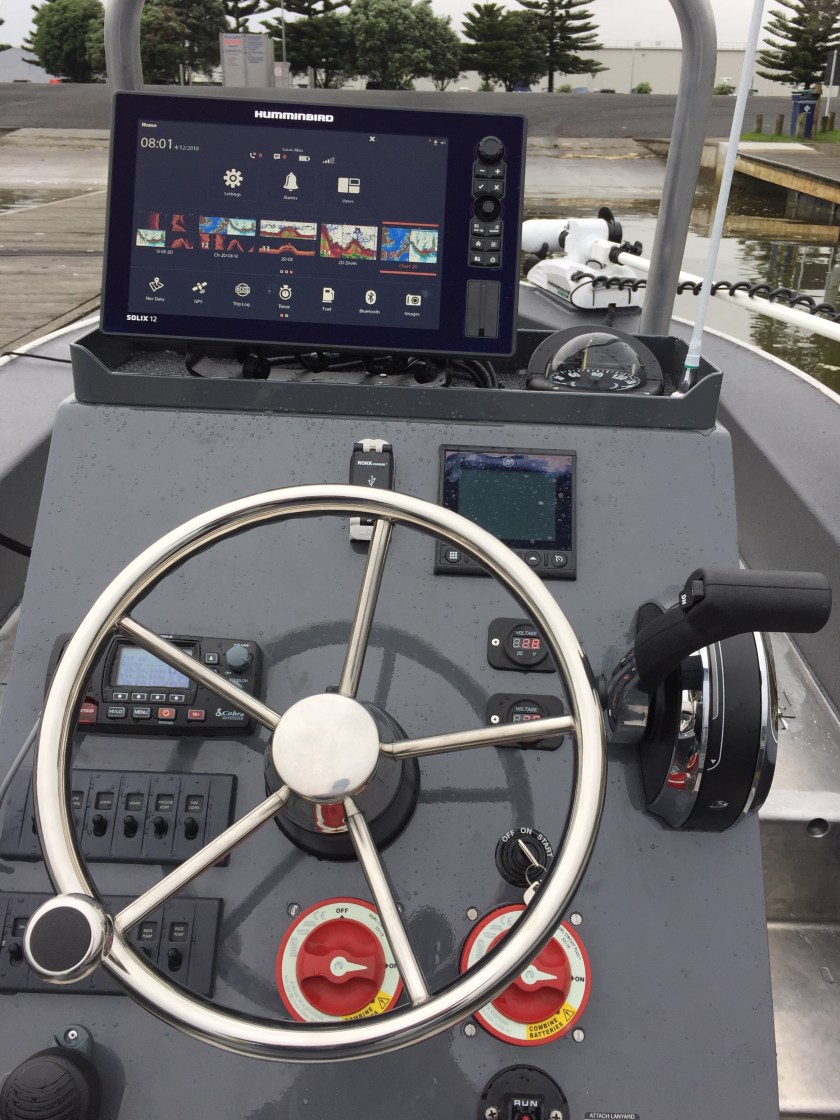
It’s been a busy winter and spring for us at King Tide. The crew at FC Boats have been flat tack custom building a new FC535 centre console guide boat. A few more tweaks and we’re away for the season.
If you want to come dance on the massive new casting deck then send us a message through the contact link here.

The Rattle Piper
Wondering what flies to use on New Zealands flats Kingfish? The Rattle Piper takes its fair share of Kingfish every season.

Like it or not a bit of acoustic burley can really fire up most pelagic game fish, particularly our New Zealand Yellowtail Kingfish.
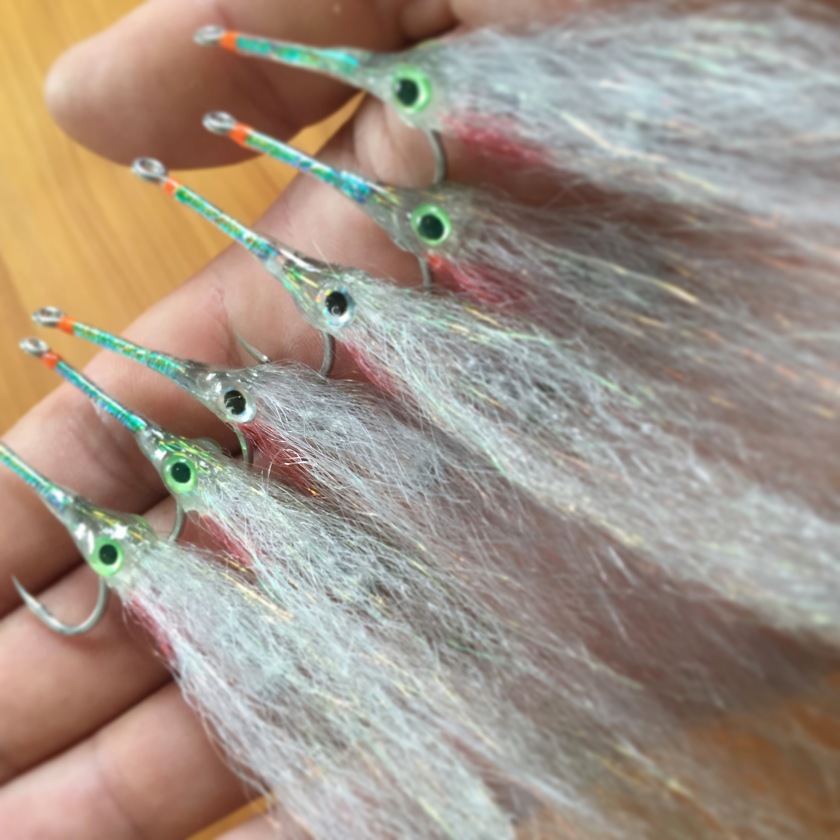
The Rattle Piper came about as a way of trial and error, much like most flies out there. Nowadays I prefer grey over off white and mostly tie them in the average sizes found in Tauranga Harbour (approximately 180-200mm). It represents piper, otherwise known as gar and also nick named kingfish candy by local livebaiters. Click this link for a previous post on piper. Something I picked up while livebaiting one night was their tendency to click, this noise is yet another trigger within the fly and should not be overlooked.
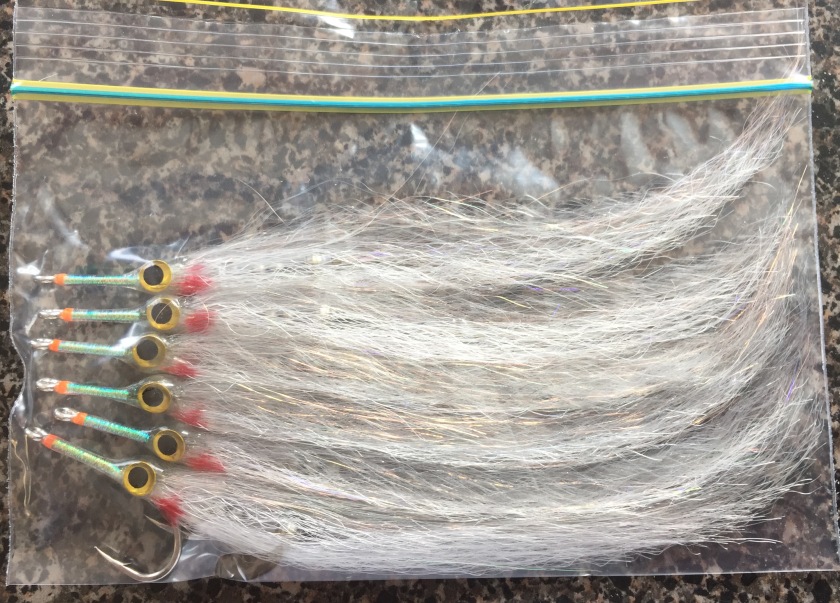
I tried adding rattles to my flies years ago with varying success. Glass ones kept smashing and I needed a way to tie them in stronger, quicker and stay inline. The plastic variety and some heat shrink now being preferred options for longevity and ease of use. Other triggers I’m a firm believer in are the slightly exaggerated eyes, two toned colour scheme, some red under the chin and the little orange UV spot at the end of their beak. This beak also adds some length to the fly and enables the fibers to be kept rearward, supported by the rattle they tend to tail wrap less in this manor.
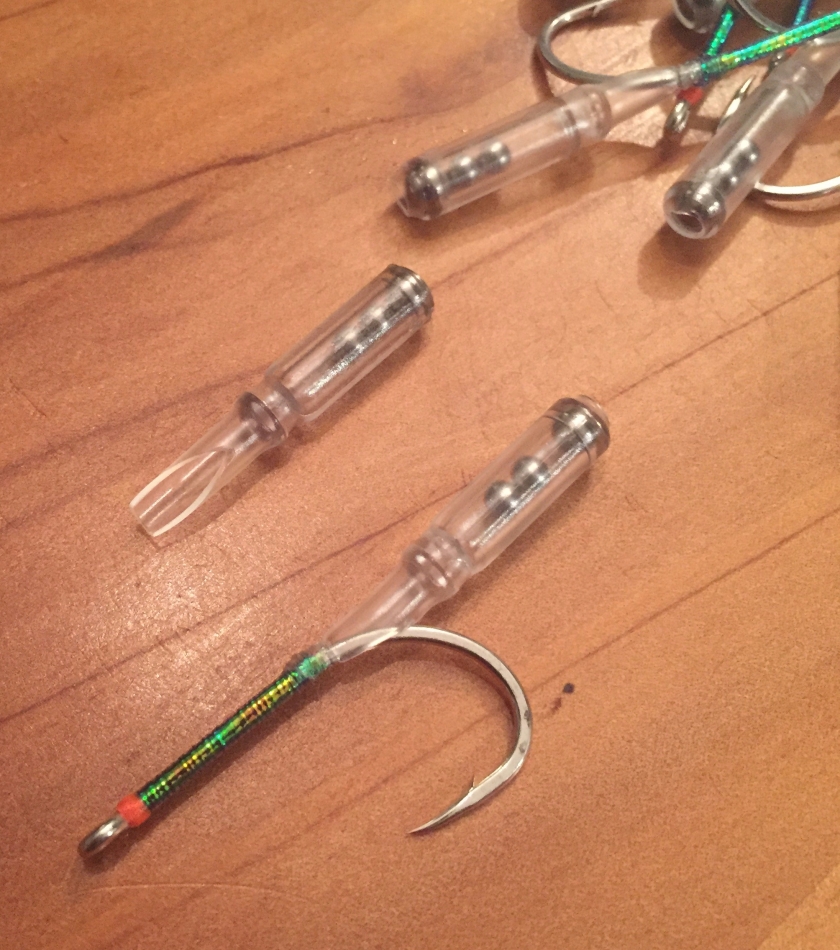
The noise created can be amplified or dimmed depending on retrieve. Quick stop/start strips will see the bearings hit the back then roll forward as the epoxy head dives on the pause. Or for a more subtle action keep a steady pace and the balls will stay back yet still create enough noise to be picked up by nearby lateral lines. At times just the commotion of it hitting the water will induce an eat so be ready from the get-go. Especially if there’s some competition for the fly amongst kingfish.
Thankfully for you these are now available via Manic Tackle Project at most good fly fishing stores. Go pick a few up and try them out on our mossy backed, yellow tail thugs. You might just enjoy teasing them into a savage boat side eat that will be etched in your mind for years to come.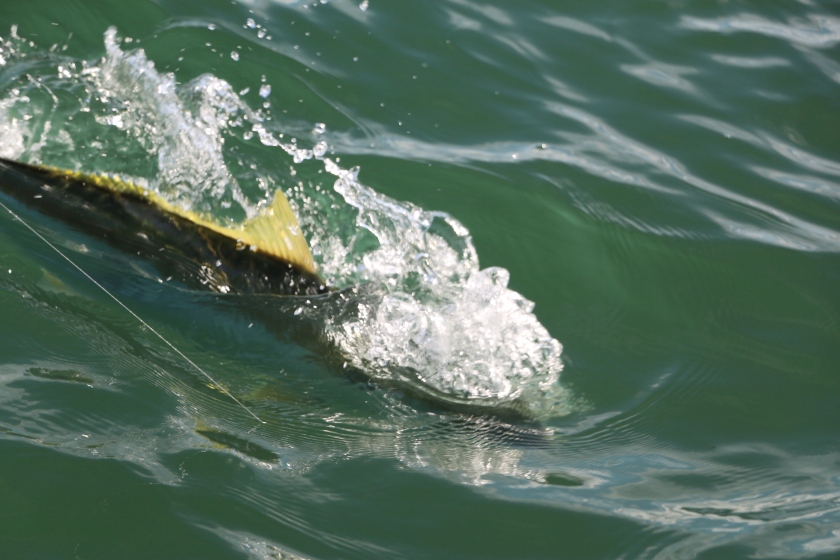 Boat side eats are the best.
A day with Saltfly fish

Recently I spent the day with Matt von Sturmer onboard his vessel Saltfly. He was hosting Josh Hutchins from Aussie Fly Fisher, showing him the amazing winter fishery he has right on his doorstep. The plan was to fish for snapper in really shallow water. “Wafting” flies for savage hit and runs or the complete opposite subtle take being a huge appeal to Matto. 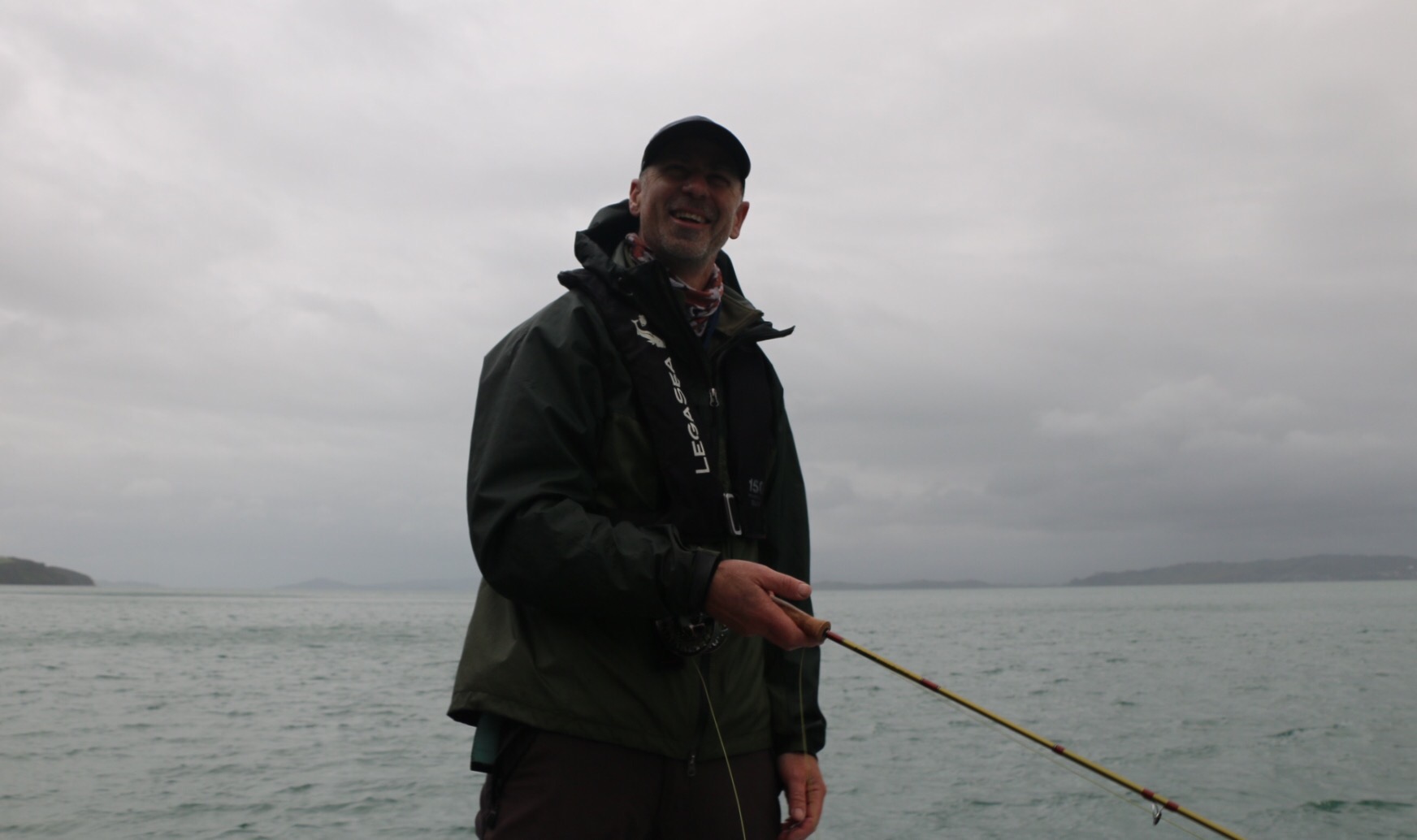

What wasn’t planned was the weather! Saturday dawned with the expected 35kn winds that were set to lash the country. The ferry from Half Moon bay to Waiheke was bumpy enough without having to jump on a smaller boat to throw flies for the day. 
This is where knowledge of a local guide who fishes their own waters almost daily in all conditions is invaluable. Add to that the safety protocols in place to operate in a professional manor and you’re onto a winner. Despite passing through some rough passages of water Matto had us fishing in areas that we could cope with easily between the frequent gusts. 
While the day didn’t herald any of the bigger specimens that make for a great fight in the shallows we caught a dozen or so scrappy fish. The shit talking and catch ups are always welcome, even if Matto and I had to have a few serious moments to discuss safety drills and training as part of our Maritime requirements.
Connections – Backing > Fly line
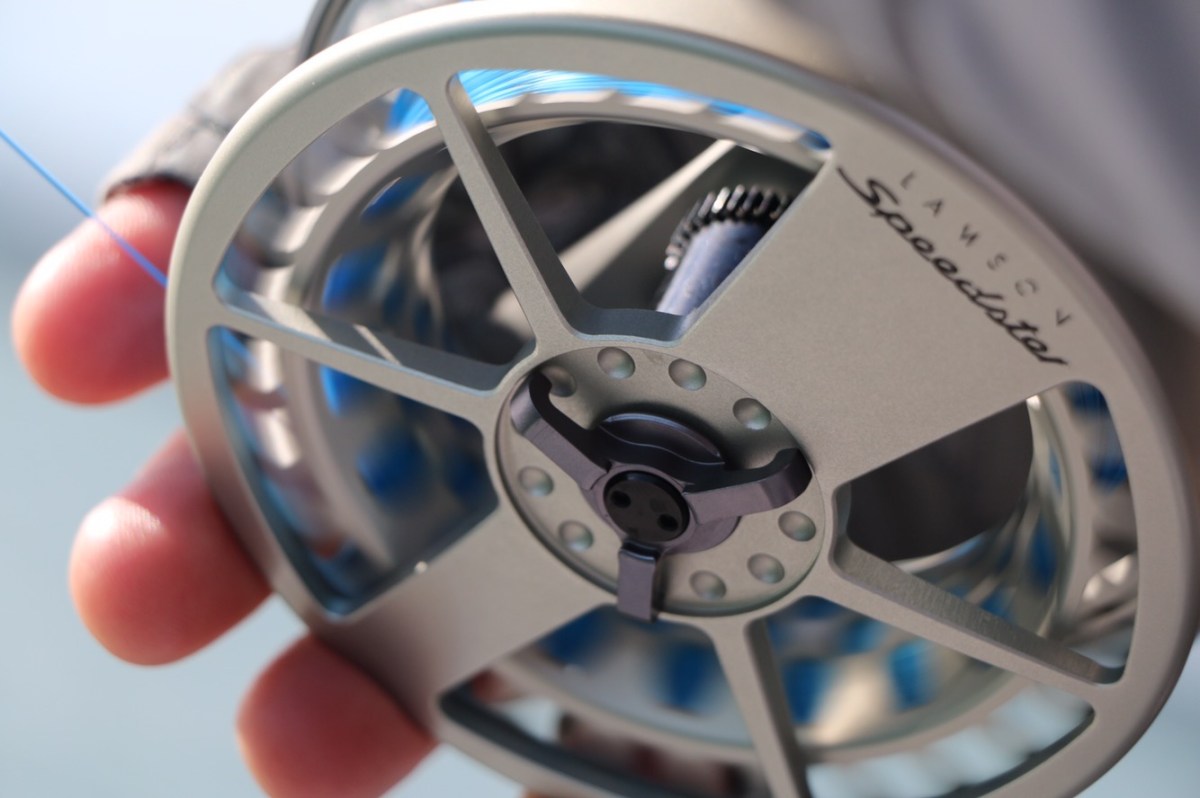
Winter is a great time to sneak out for the odd decent day of fishing but it’s also a time to service gear, prep rigs, tie flies and think about your plan of attack for the coming season.
Something that came to light while changing fly lines recently was how many shitty backing to fly line connections I’ve seen. There’s no denying powerful fish need strong connections. 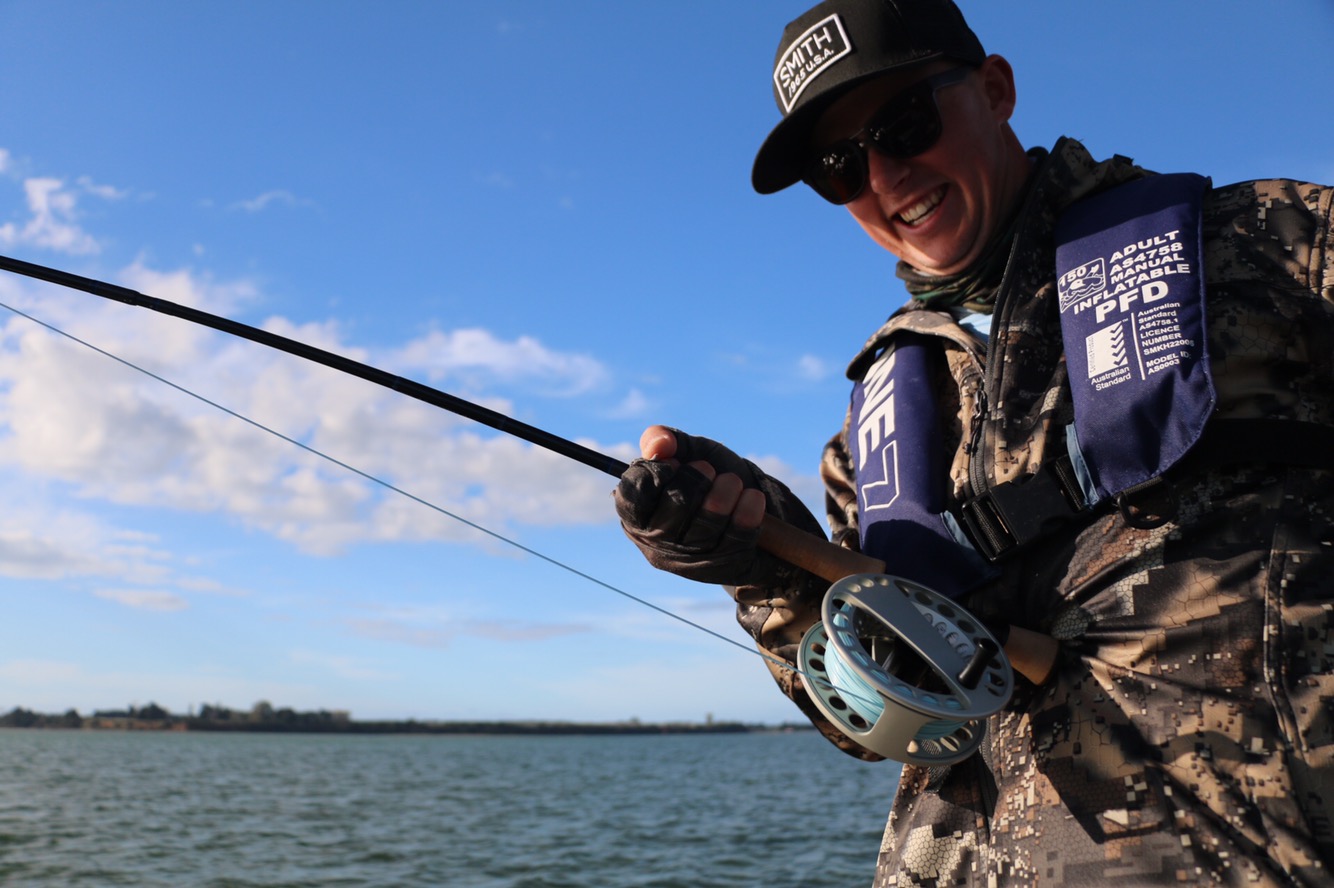

My flats Kingfish assemblies tend to step down from 60lb fine diameter backing to fly line (approx 35lb) and ending with around 20-30lb straight section of fluoro leader. This is to help avoid losing fly lines but also try to prohibit fish carrying excess line around if they bust free (barbless hooks should also get a mention for this reason).
At a pinch you can double your backing and make a doubled Bimini loop. This has twin loops and is better than a single strand which can bite into a fly line.
My favourite is to create a sleeve of braided 50lb mono and use this as the load distributor through your loop-loop connection. The steps below should get you underway and have more confidence in your connection as it sings out the guides. 
- Cut a length of braided mono to make a loop big enough to pass your reel through – this makes changing lines easier if you need.

Braided loop should be big enough to pass reel through. - Pass backing through braided mono and leave tag end of 50cm
- Thread whip one end of mono. Give it a light dab of super glue and roll in fingers to absorb.
- Smooth the mono tightly to the other end, ensuring no slack. Repeat whipping/gluing.
- Now double the backing up to form your mono sleeve loop. Make the two whipped ends slightly offset – this should help taper the transition of finished knot.
- Plait braid back down onto the mono whipped tag ends. Start far enough up from mono ends to create a 4-5cm plait.
- Once you reach mono start half hitching, using opposing hitches. These should start to trap the braided mono.
- Work hitches down until you’ve covered previous whipping and secure tag with a rizutto finish.
- Cover knot with Loon soft head or similar flexible glue.

Tied, glued and dried. Ready for a beating. - Allow to fully dry, nothing worse than winding fly line on and discovering you’ve glued it to your backing knot!
- Attach fly line by passing backing loop fully through fly line loop then passing reel through large backing loop. Finished connection should resemble a reef knot.
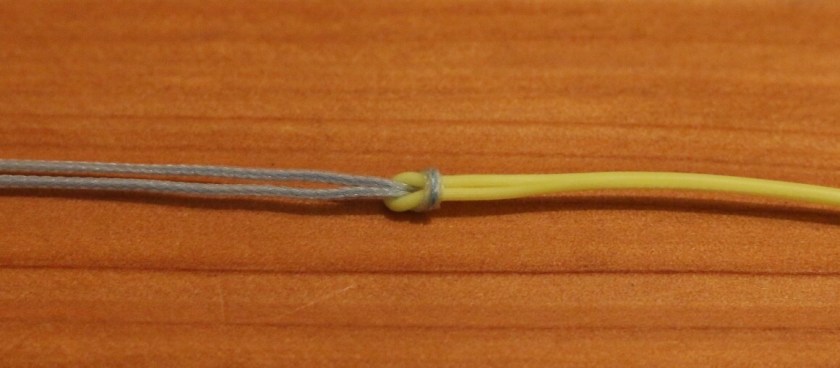
Finished loop to loop connection.
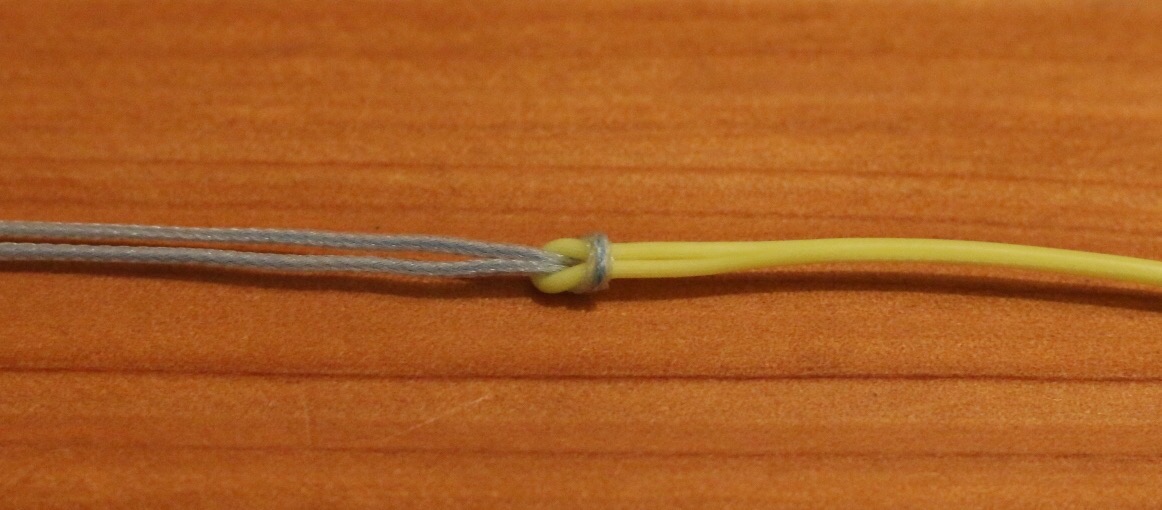
Some useful knot links.
Plait – https://youtu.be/2uUWS7dzOn0 NB: stop at 1:20 mark, don’t use finishing knot in video. Start hitching instead.
Rizutto finish – https://youtu.be/H09wT8r8dC8
 Taurangas only local saltwater flyfishing guide.