Busting Loops 

That fly you’ve spent an age tying to get the most out of in the water is now ready to tie on. Let the loop knot debate begin…
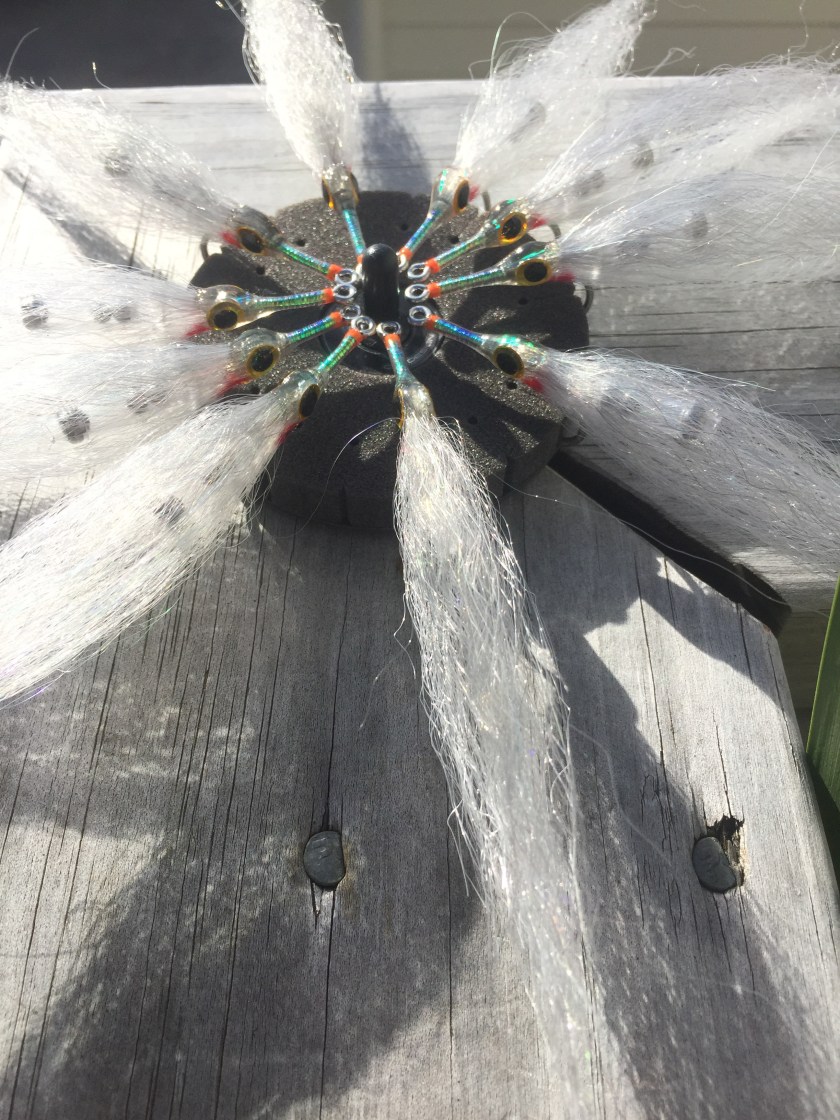
best kingfish flies, baitfish, salt water fly, fishing, new zealand, rattle piper
A rack of Rattle Piper kingfish flies ready for action.

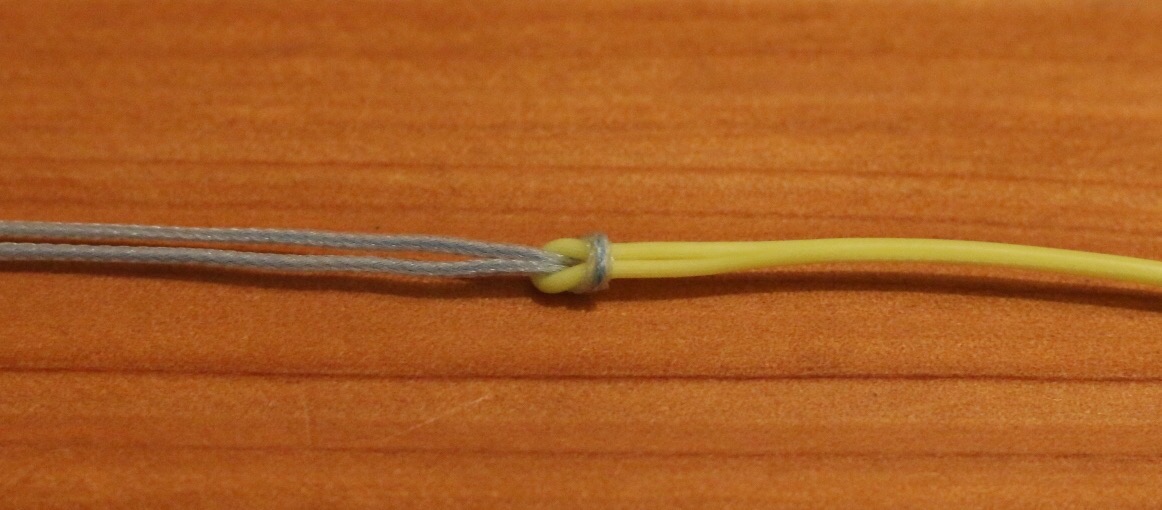
If you’re after unrestricted movement then it’s really hard to go past loop knots. There’s  a few to choose from, each with their own merits. Leftys, perfection, homer rhodes, open uni et al. For me I utilize a knot for each stage of set up, each one being a potential weak area to be exposed.

It makes sense to choose a knot that’s not only strong but is easy to tie. A huge bust off, urgent fly change or rocking boat will always try to hinder your best efforts to re-tie a salt water leader. Find a knot that suits your set up requirements and test it, try other options if needed. Then learn to tie it opposite handed, behind your back, blindfolded and as fast as possible – this might just be the difference to connecting to a fish under pressure.

Salt fly knots
The beginnings of the graveyard of tested knots

Harking back to my school science fair days (1st place in Applied science Hawkes Bay Science Fair 1990 something) I use a simple tug of war test. A different knot is created in each end of commonly used material. These are then pulled up evenly until one fails. To keep things fair three tests are done under each configuration, one by one an eventual winner is found.
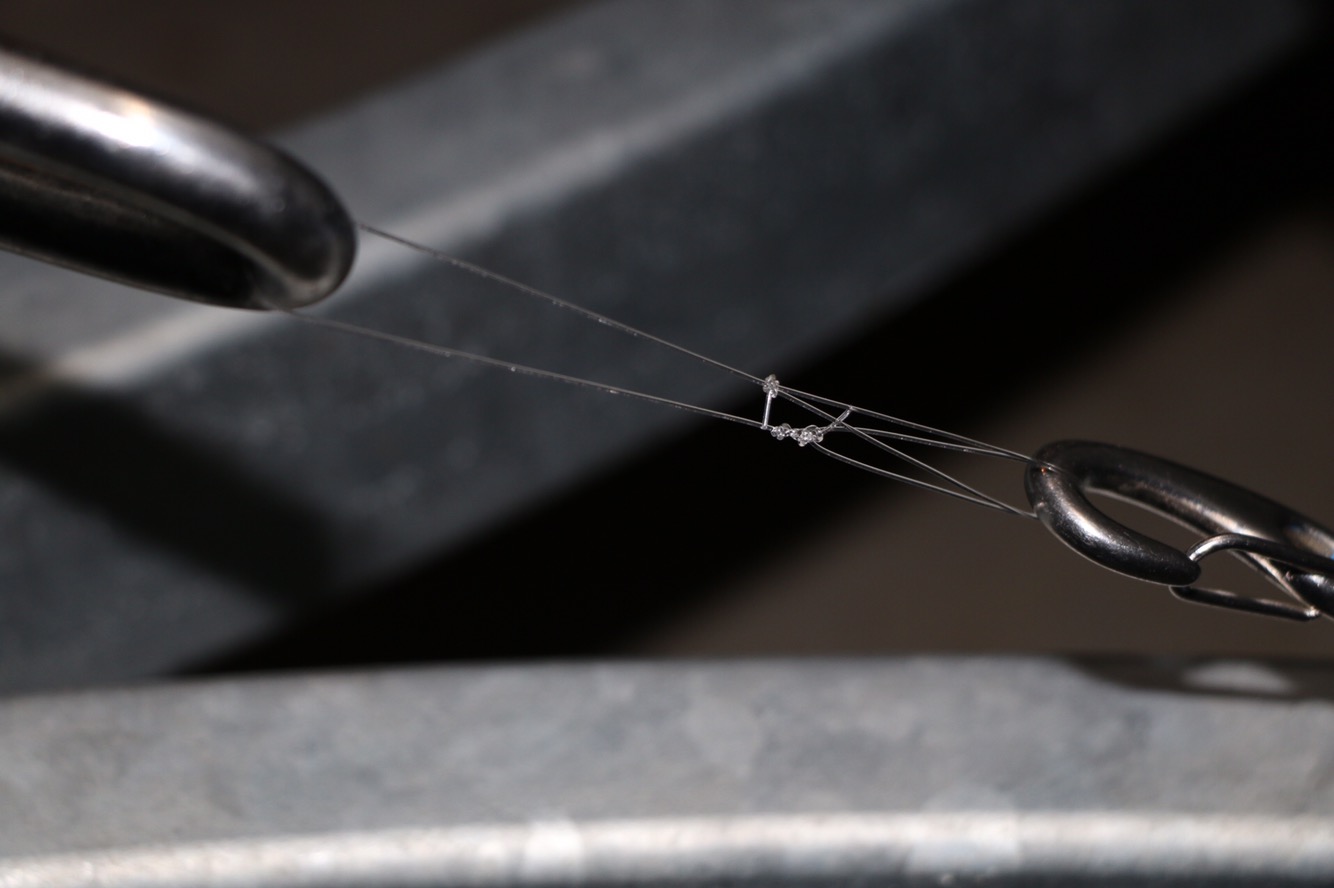
Salt water fly fishing knot test
Who’s going to win? Leftys or Perfection

Although I knew the eventual winner was always going to be Leftys loop, I mostly wanted to check which of my commonly used loop knots were a close second to retie quickly and rely on in pressure situations. This placing goes to the perfection knot, quick and easy plus it’s a good looking knot to boot. 

Interestingly was the Homer Rhodes and how it was tied. If you look at the records you’ll see 1/2, 2/1 and 2/2 listed. These were the amount of  overhand passes through each stage of the knot when tied. For example; 1/2 is a basic over hand knot to begin with and then finished with a two turn. This ended up the preferred way of tying this knot in 30lb Hatch flouro leader.

Some points to note:

  • Not all knots perform to the same extent through various weights and types of material. Nor do they behave well with other brands/types of leader material at times.
  • In order to function to their potential knots must be trialled for effectiveness prior to use. No point letting the fish show you your knot choice sucked.
  • This experiment was more for my peace of mind than to prove the exact tolerances of each knot. And also rank my top 3 loop knots in conditions I’m familiar with.
  • Sometimes knots fail, don’t cry about it – try and figure out why. Was it an old leader, had it sustained some damage, not enough turns to secure it, tag end cut too short? These are some realities of potential failure, eliminating them for next time is a valuable lesson.
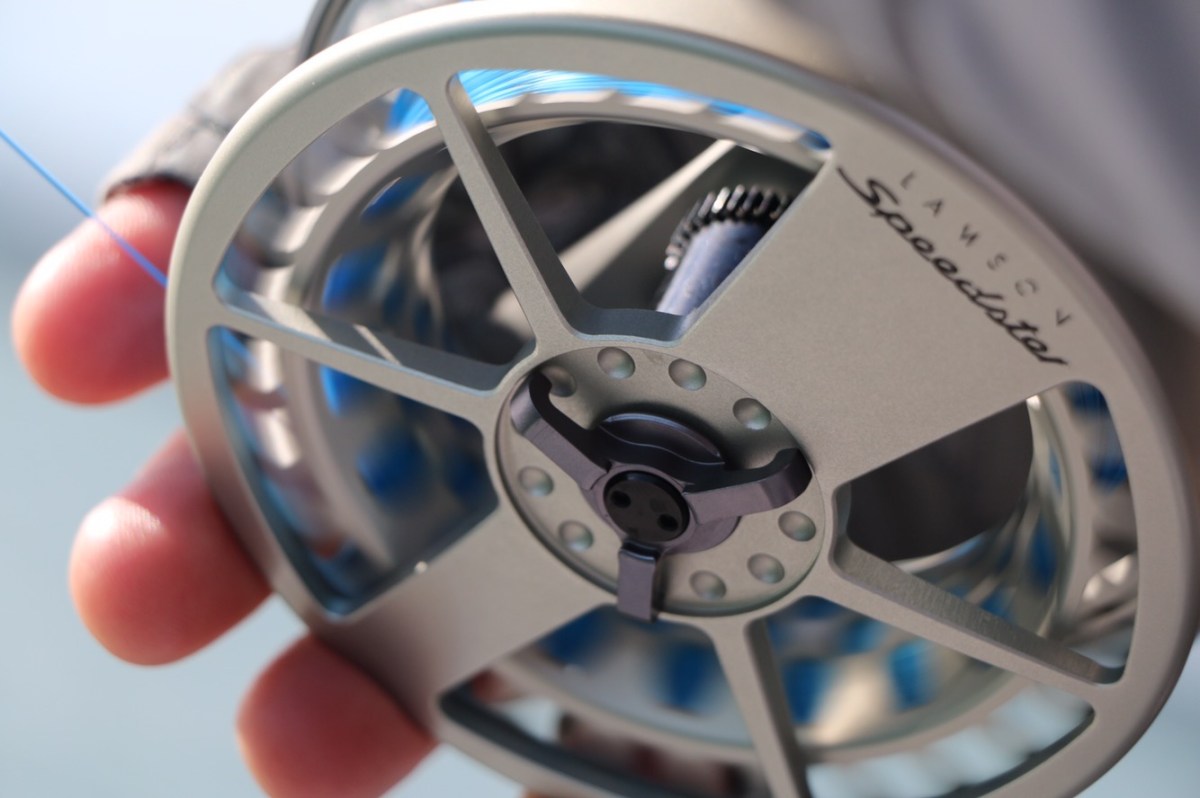
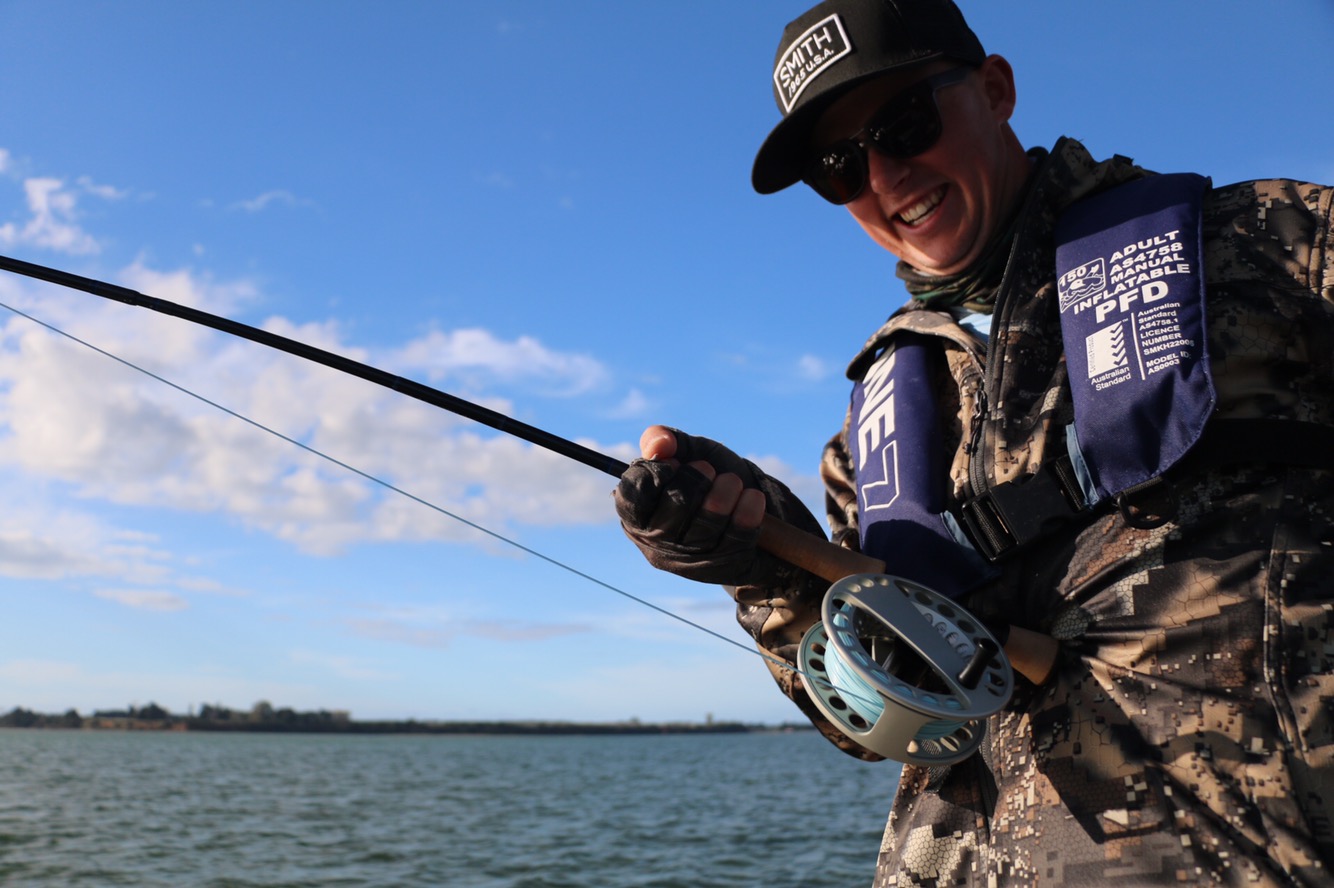
Connections – Backing > Fly line

Winter is a great time to sneak out for the odd decent day of fishing but it’s also a time to service gear, prep rigs, tie flies and think about your plan of attack for the coming season. 
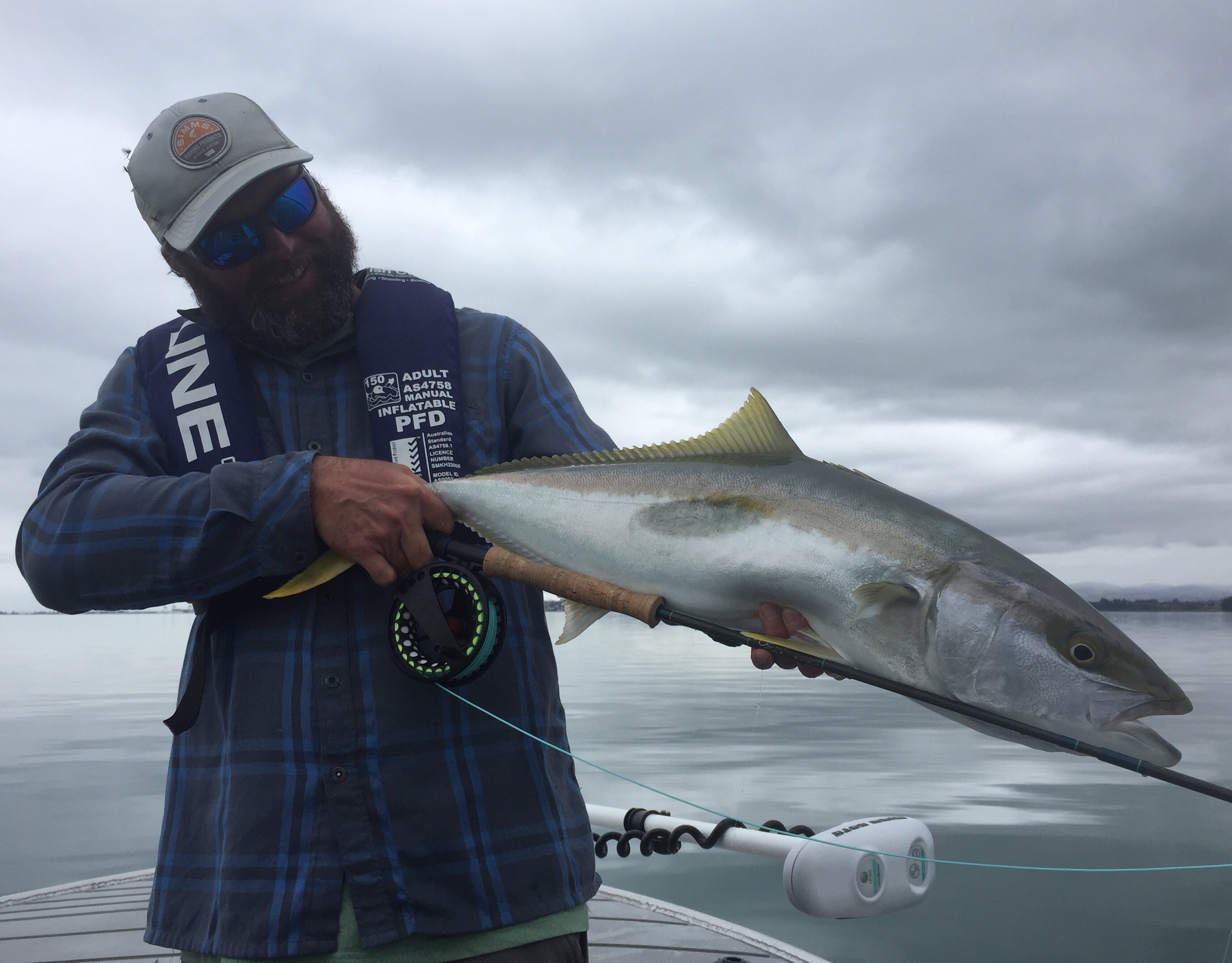
Something that came to light while changing fly lines recently was how many shitty backing to fly line connections I’ve seen. There’s no denying powerful fish need strong connections.  

Marc Clinch about to hear his backing knot sing.
Strong fast runs see the backing knot tested rigorously.

My flats Kingfish assemblies tend to step down from 60lb fine diameter backing to fly line (approx 35lb) and ending with around 20-30lb straight section of fluoro leader. This is to help avoid losing fly lines but also try to prohibit fish carrying excess line around if they bust free (barbless hooks should also get a mention for this reason). 

At a pinch you can double your backing and make a doubled Bimini loop. This has twin loops and is better than a single strand which can bite into a fly line.   

My favourite is to create a sleeve of braided 50lb mono and use this as the load distributor through your loop-loop connection. The steps below should get you underway and have more confidence in your connection as it sings out the guides. 

All the tools you need for this connection

  • Cut a length of braided mono to make a loop big enough to pass your reel through – this makes changing lines easier if you need.
    Braided loop should be big enough to pass reel through.
     
  • Pass backing through braided mono and leave tag end of 50cm 
  • Thread whip one end of mono. Give it a light dab of super glue and roll in fingers to absorb. 
  • Smooth the mono tightly to the other end, ensuring no slack. Repeat whipping/gluing. 
  • Now double the backing up to form your mono sleeve loop. Make the two whipped ends slightly offset – this should help taper the transition of finished knot. 
  • Plait braid back down onto the mono whipped tag ends. Start far enough up from mono ends to create a 4-5cm plait. 
  • Once you reach mono start half hitching, using opposing hitches. These should start to trap the braided mono. 
  • Work hitches down until you’ve covered previous whipping and secure tag with a rizutto finish. 
  • Cover knot with Loon soft head or similar flexible glue. 
    Tied, glued and dried. Ready for a beating.
  • Allow to fully dry, nothing worse than winding fly line on and discovering you’ve glued it to your backing knot!
  • Attach fly line by passing backing loop fully through fly line loop then passing reel through large backing loop. Finished connection should resemble a reef knot. 
    Finished loop to loop connection.

Some useful knot links. 

Plait – https://youtu.be/2uUWS7dzOn0 NB: stop at 1:20 mark, don’t use finishing knot in video. Start hitching instead. 

Rizutto finish – https://youtu.be/H09wT8r8dC8

King Tide Salt Fly – Autumn 2017 Wrap up

Short edit of some Autumn salt fly action in Tauranga Harbour, New Zealand

Sorry for the lack of posts lately. Seems adding another child to the litter makes time slip away all to easily. We’re winding the season down now with water temps dropping almost half a degree daily at some stages. The fishing has been really good with most clients scoring multiple fish and having shots at plenty more.

I’ve knocked a clip together of some of the last 6 weeks highlights. From epic sunrises to masses of tailing kingfish and the hectic, stubborn fights that follow. Please excuse some of the shaky camera work – guiding, filming and operating a vessel at the same time all present their own challenges!

Lastly, if you want to be apart of this next season then drop me an email here. I look forward to hearing from you.

Enjoy,

Lucas


Sometimes Summer

To say we’ve had an uncharacteristic summer would be like banging on the same drum the wind has been banging on. Constant spring like winds have remained until early February and only recently have we seen some quality days that haven’t involved battling the elements. That said, clients have stepped up to the plate when required and slogged it out during the testing parts of the day – often with reward for their persistence. It helps when you have a harbour that fishes well in most winds and has areas to hide from it during the day if needed.

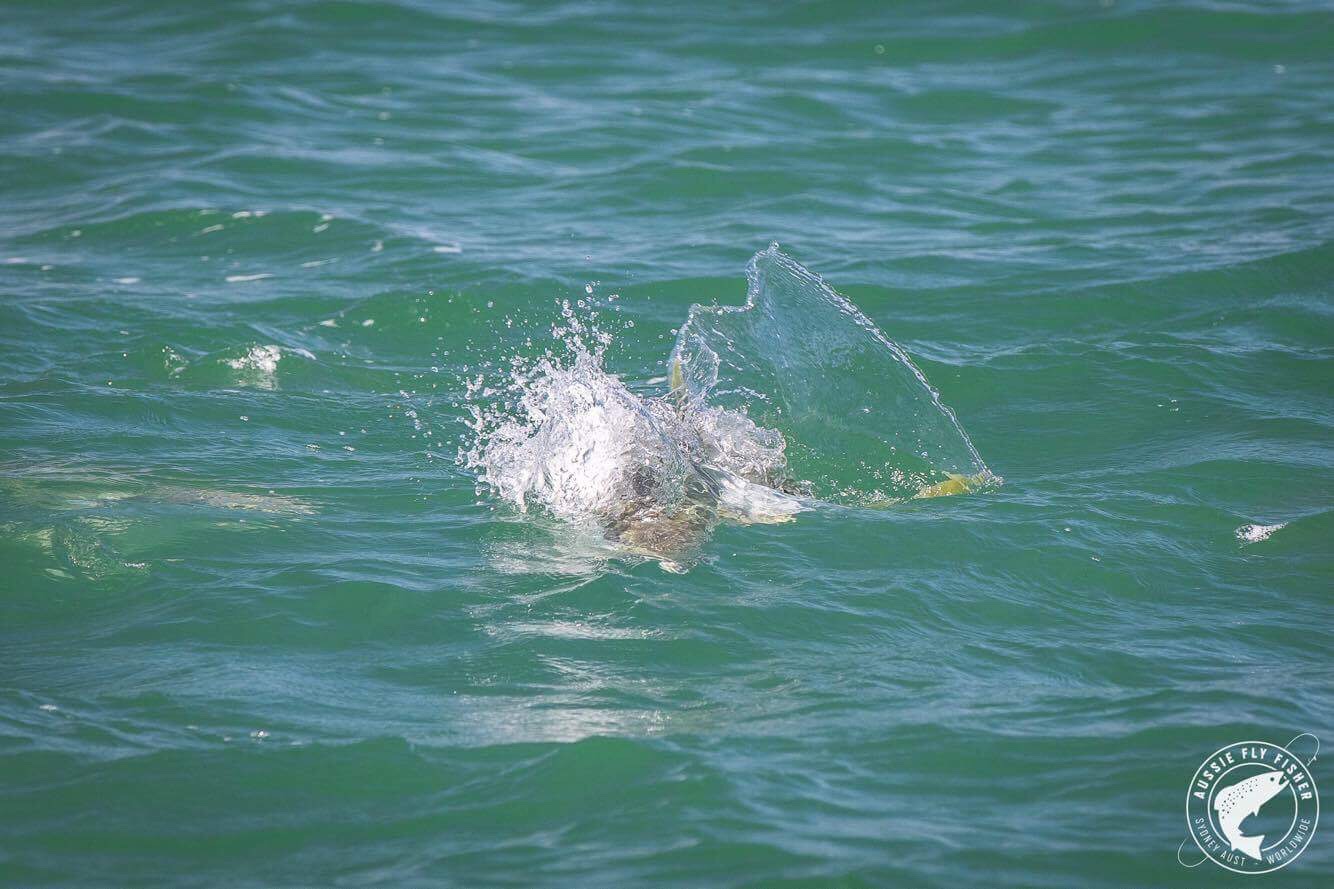
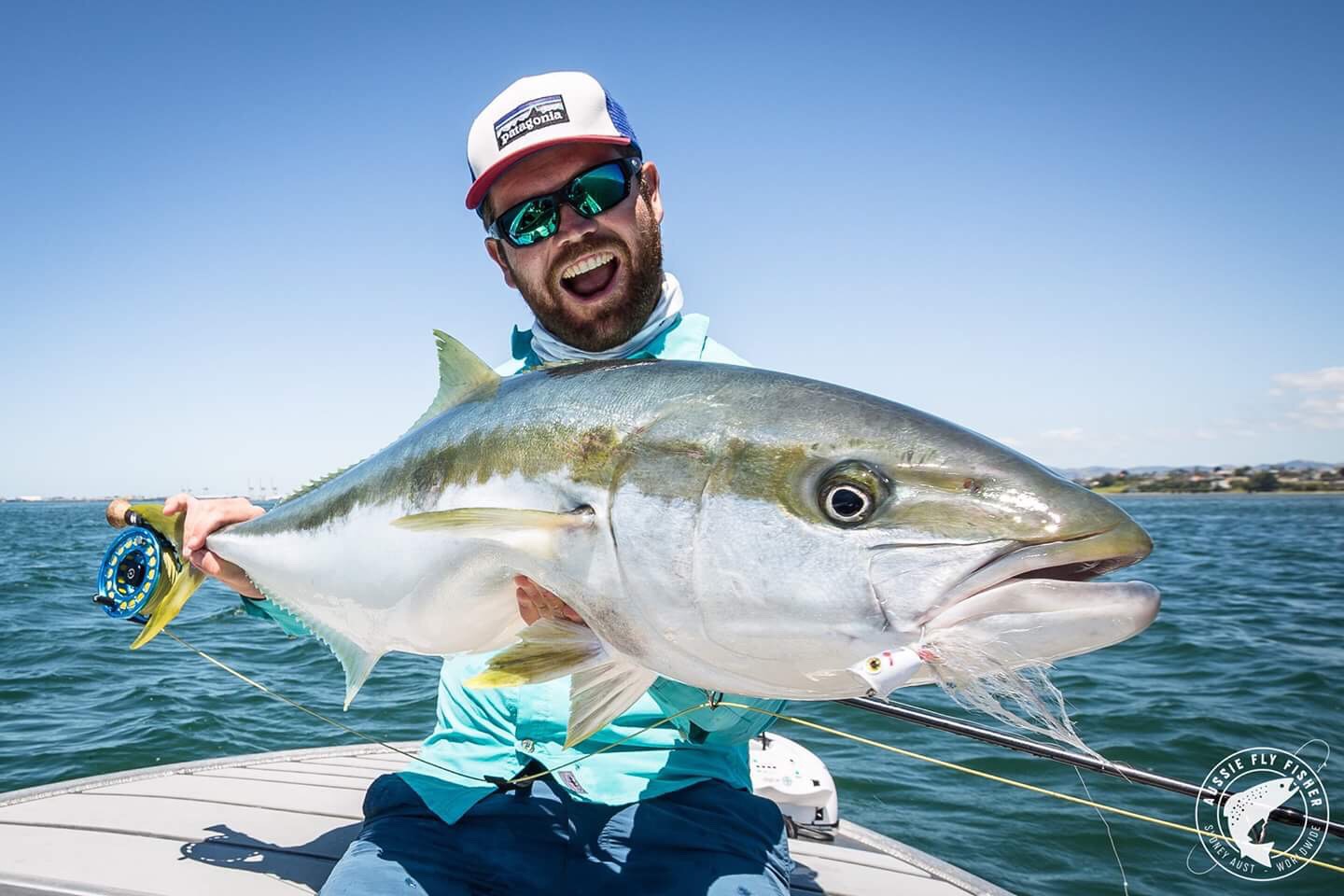
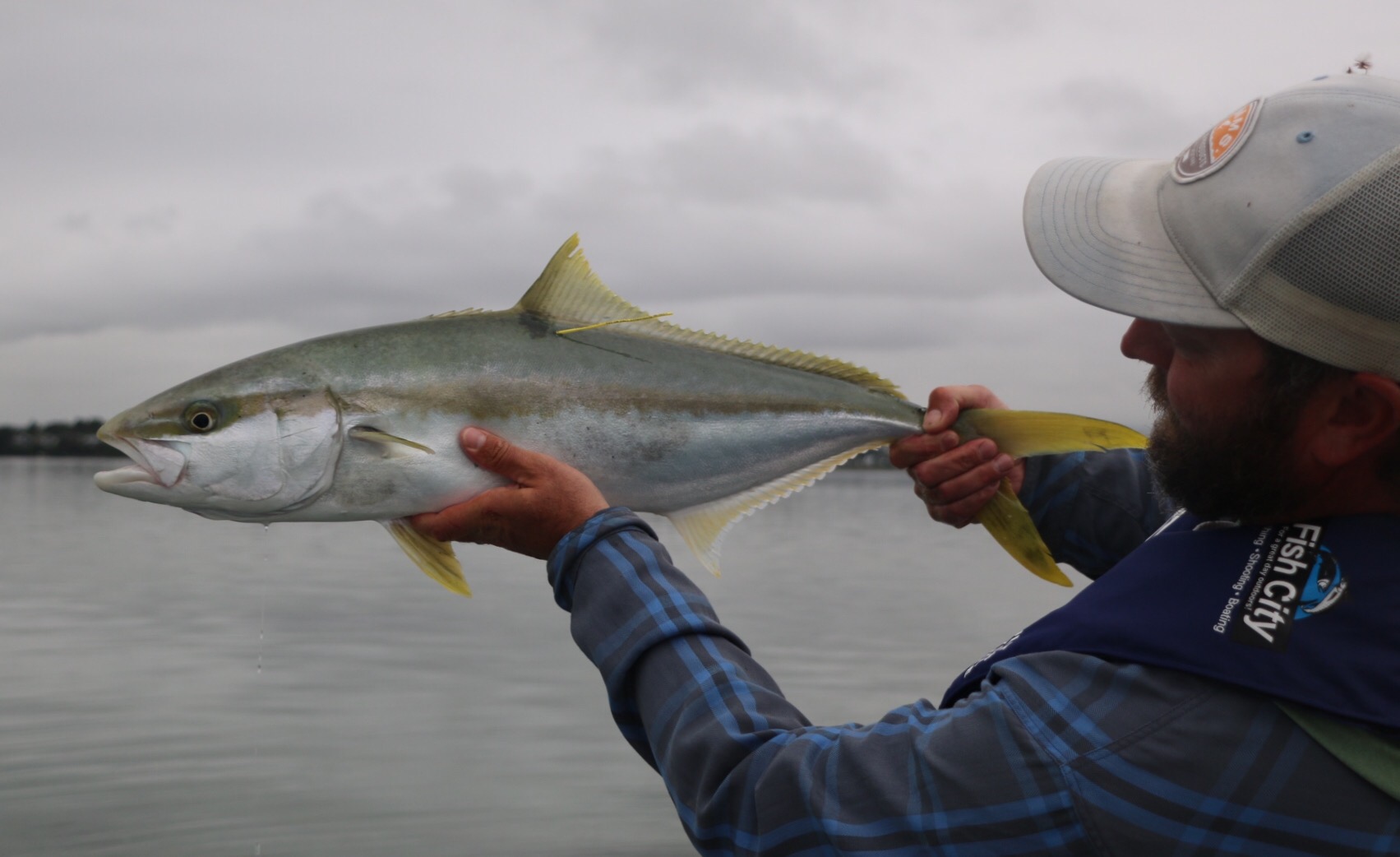
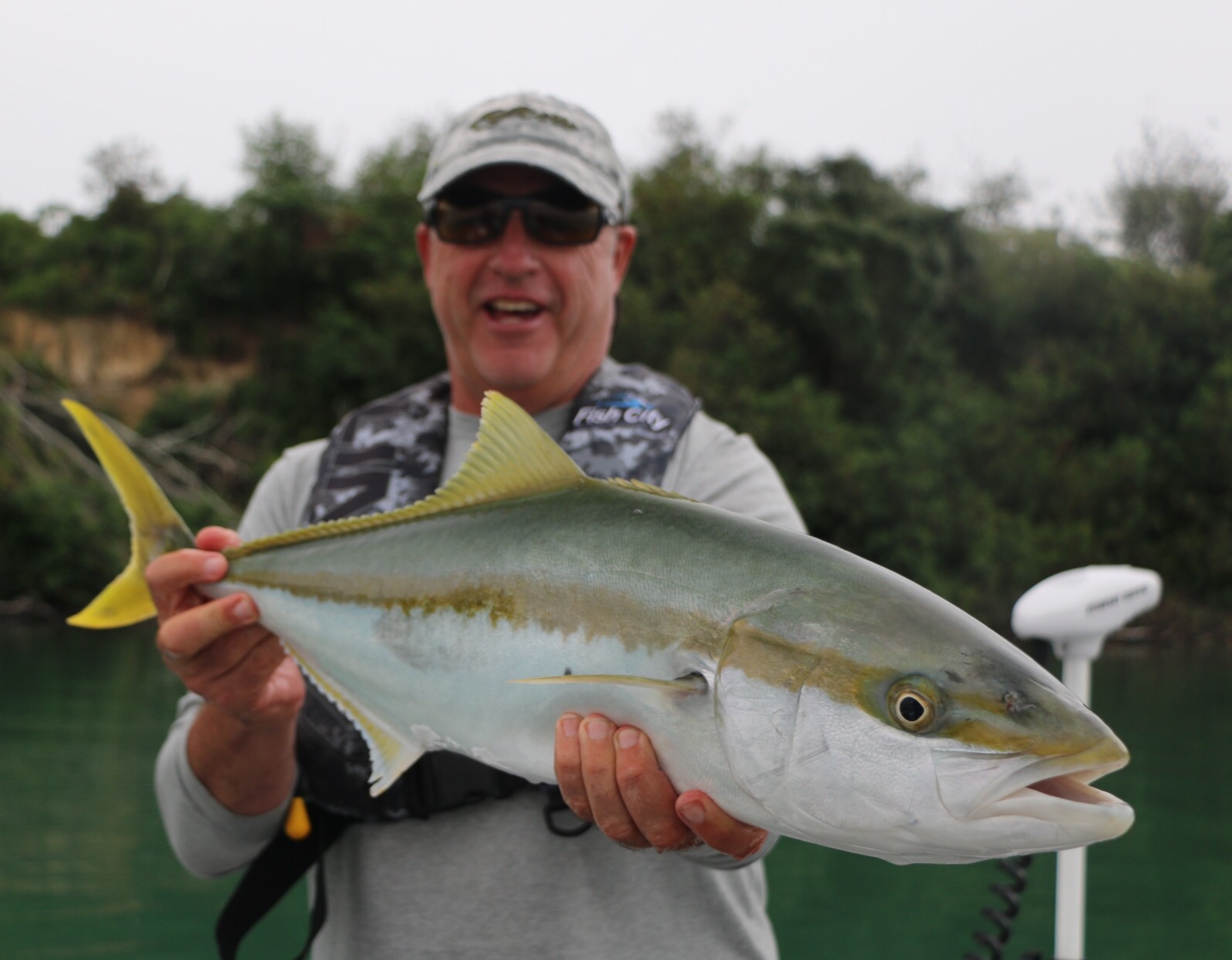
My last report made mention of the marker pole action that was starting to fire up. Since then we have seen loads of fish milling around them at certain stages of the tide. We will see good numbers congregating for the next couple of months and for now the bigger models are also present. One group of fish seen on 2 consecutive days had members punching 30kgs. It was fitting Josh Hutchins from Aussie Fly Fisher was onboard to check out the fishery we have here and was rewarded with one of the smaller fish from the mob.

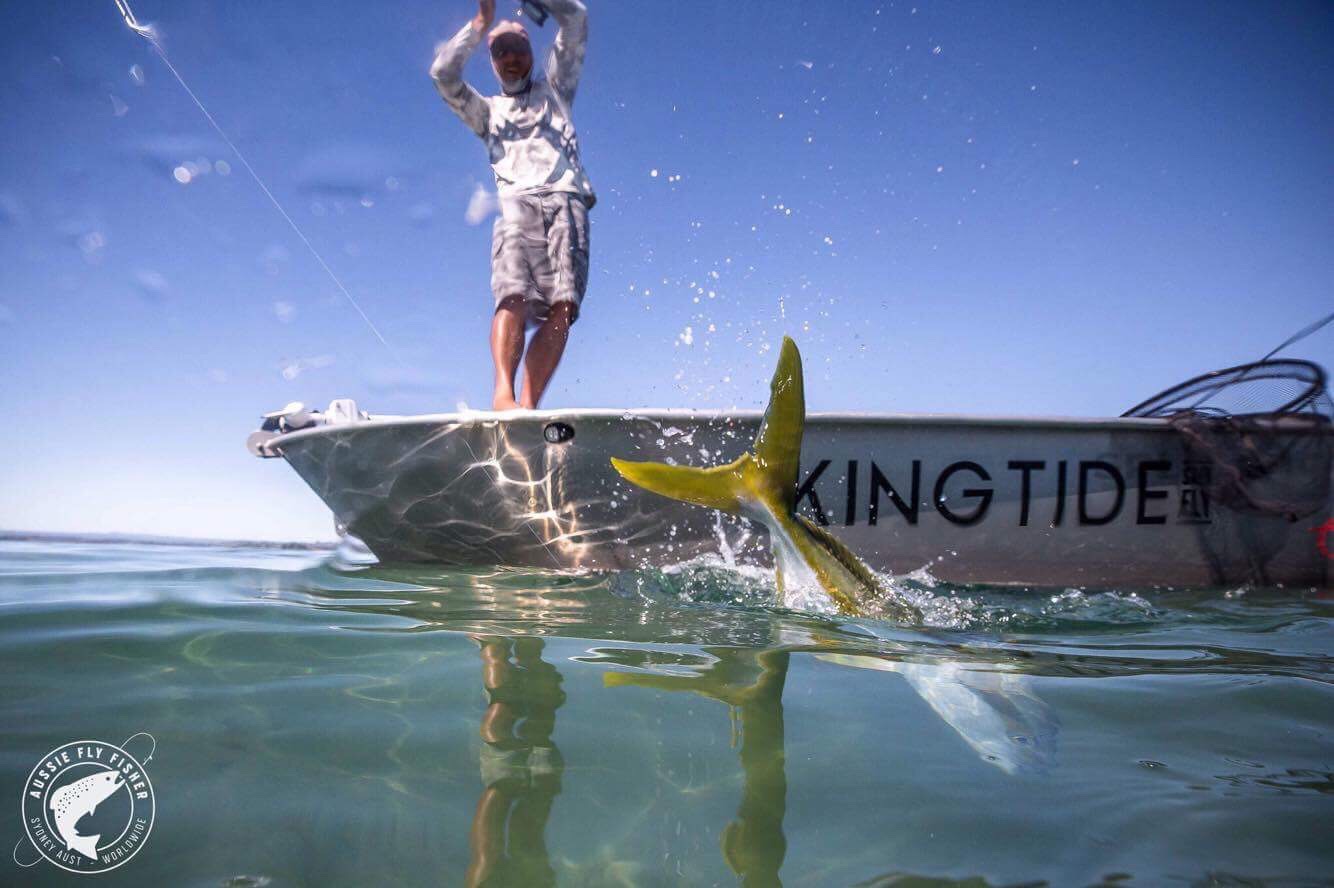
This capped off a memorable 3 days fishing with him that went from good, to great, to phenomenal. The bite times lasted quite a while and it wasn’t too hard to find fish in between Josh getting around 2000+ images for his ever growing portfolio. 

Next up we had some of the boys from Manic Tackle Project, we popped two Ray Rider cherries that afternoon. We also popped a few manus (Kiwi slang for splashy bombs bro) off the boat in the heat. Unfortunately we didn’t manage Cams fish, he got pushed overboard to chase some while we battled another so fair credit to him “Hey Cam, you got a phone in your pocket?”

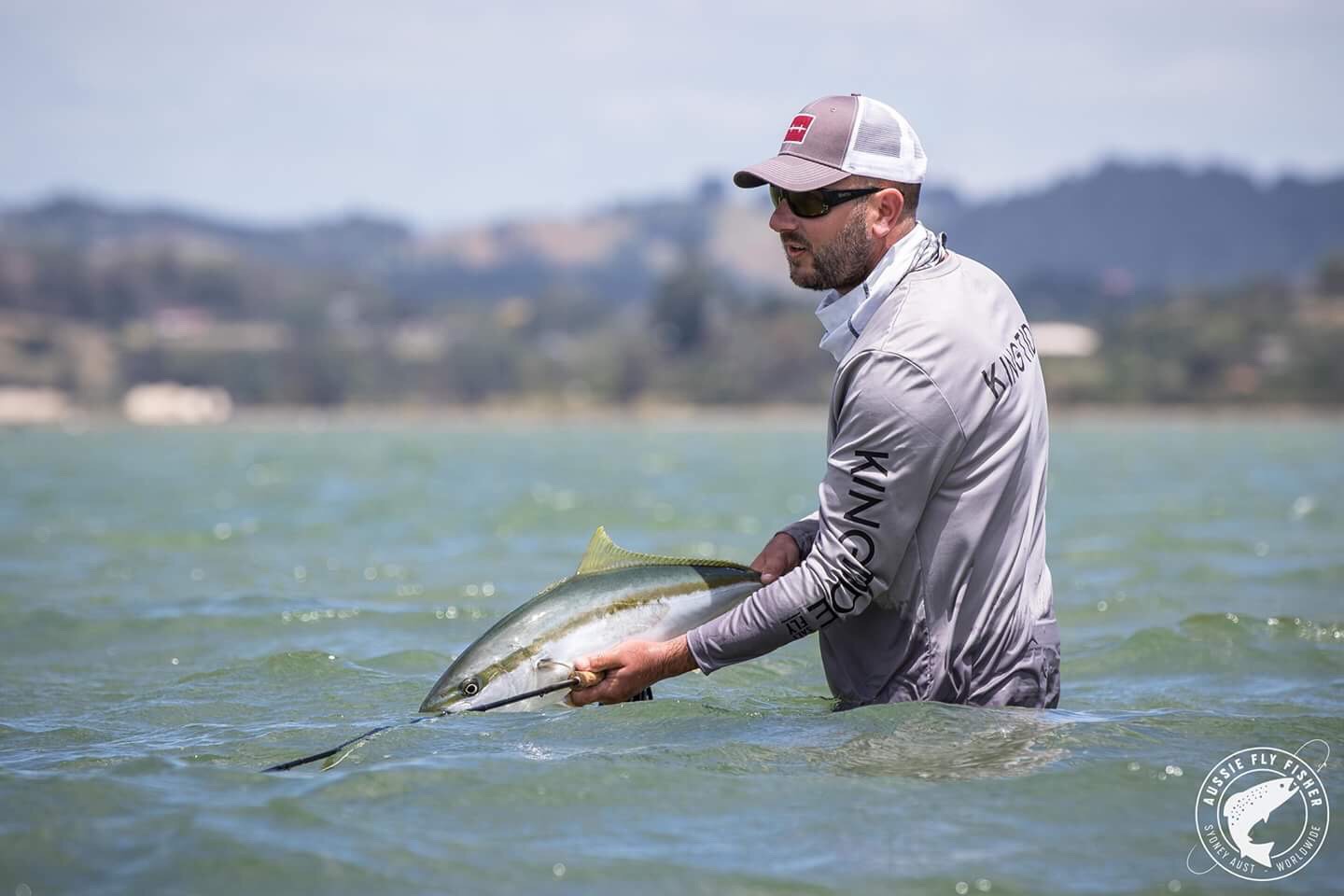
The fish currently on the flats are receiving a fair amount of pressure, in particular the town side fish that see both waders and boat traffic chasing them. They still have to eat (or get pissed off with your fly) so make sure the first cast counts. Often I have my anglers ensure their line isn’t hung up, we have a good angle on the fish and they take a breath to steady the nerves prior to casting. Easier said than done when your shot can come and go in a heartbeat. This all goes out the window of course when your best cast gets rejected and a snarled pile of line gets hammered. The humbling nature of these fish will keep you coming back for more.

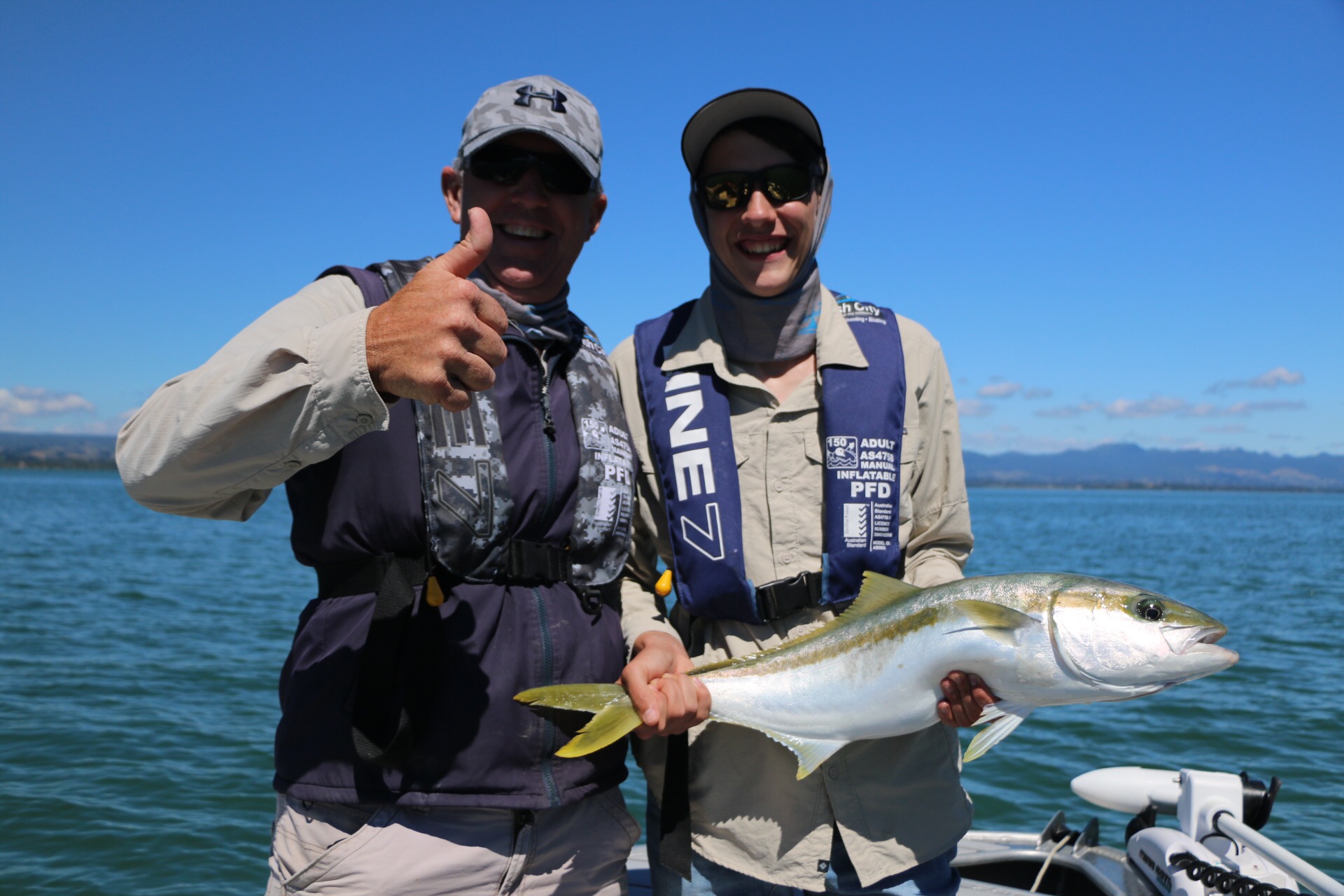
There has been quite a few younger guys getting into salt fly here lately. It’s really satisfying seeing them develop more skills during the day and consequently nail a Kingfish. Father and son Rob and Norman Dines being the latest duo to accomplish this. Norm is currently building a fly rod and I’m told he’s now working overtime to complete it.

Water clarity has been superb (it got a bit dirty with our first decent rain event but cleared quickly) and the sea lettuce is dying off – albeit a few weeks later than normal. Cloud cover can’t be controlled but easily tolerated and worked with, some of these days have been glass outs so seeing wakers is a lot easier. You really have to take what you get on these occasions.

Baitfish are in epic numbers and the predators that follow are well aware of this. Packs of Kingfish working the shallow shoreline and cartwheeling bait into the trees above being a real standout. This time of the year sees the harbour at maximum capacity and will last for a few months like this until the water starts to cool dramatically. We have spaces left for March, April and May so if you’d like to get a taste of it let me know here

The Salt Fly Hook Up is just a few days away and already participants are hitting the Harbour. Great to see the growth in this sport being embraced by more and more people each week. At this stage there are around 60 confirmed attendees, almost double from last year. 

I’ve had a fortnight off the water welcoming the arrival of our daughter and am looking forward to getting back into it this week. Margot Piper Allen entered the world an hour after her due date and right on high tide. We’re all doing well and settling back into the swing of things. 

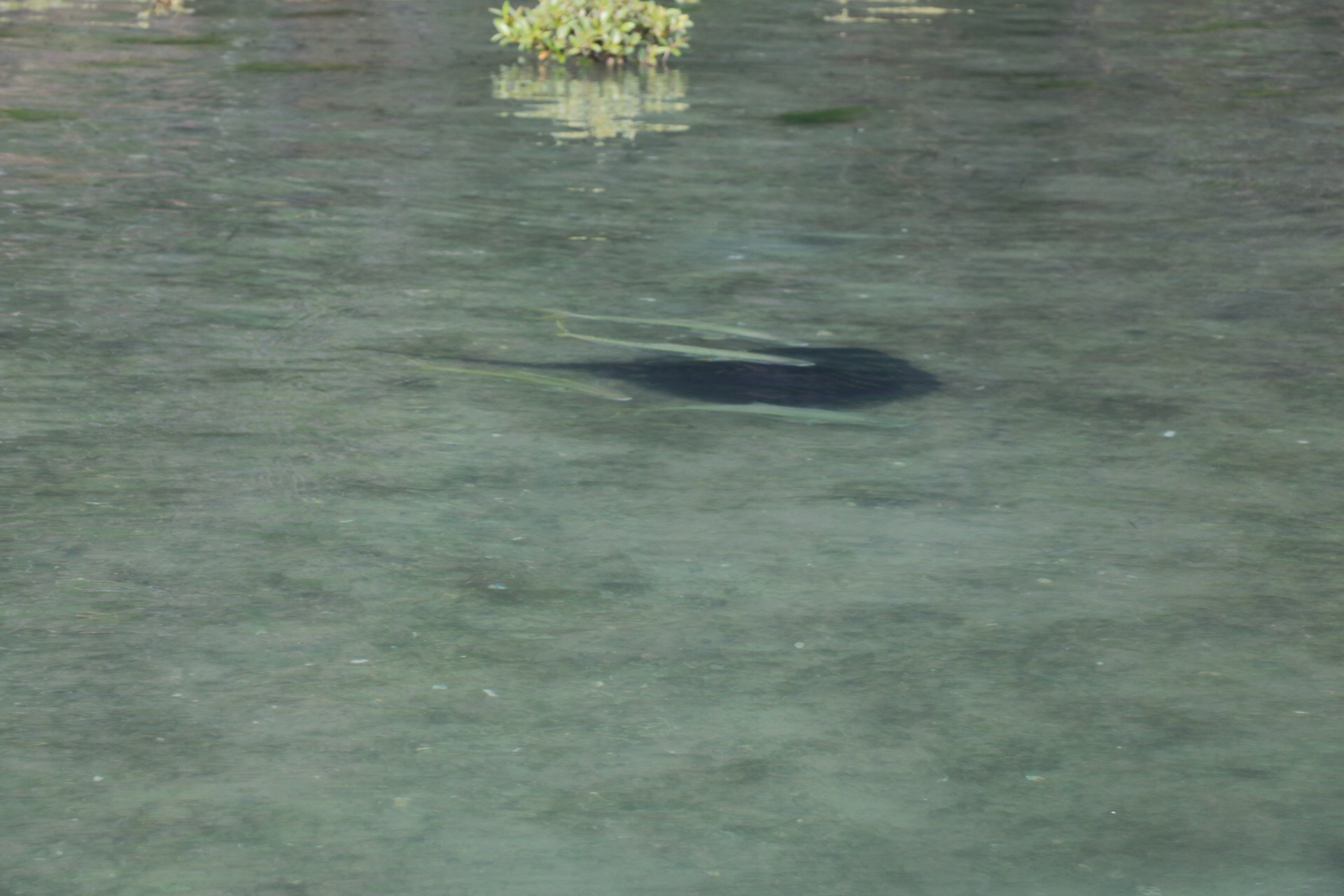
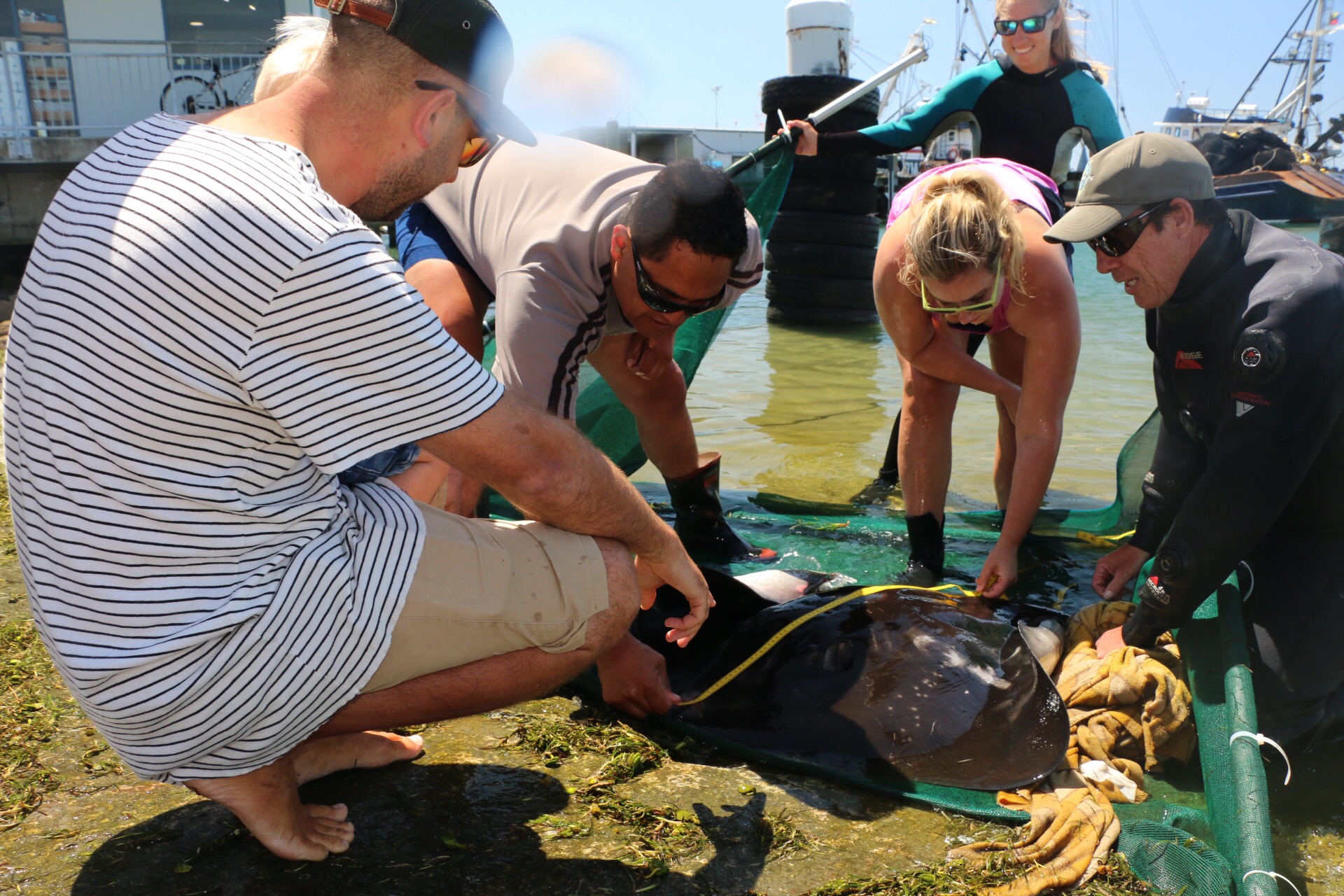
 During this time I did manage to finally catch up with Helen Cadwallader and see her research into Stingrays here in Tauranga. The article can be read here. 

Lastly, don’t forget to subscribe to the website, you’ll be kept up to date that way. 

All the best for the coming months 

Lucas