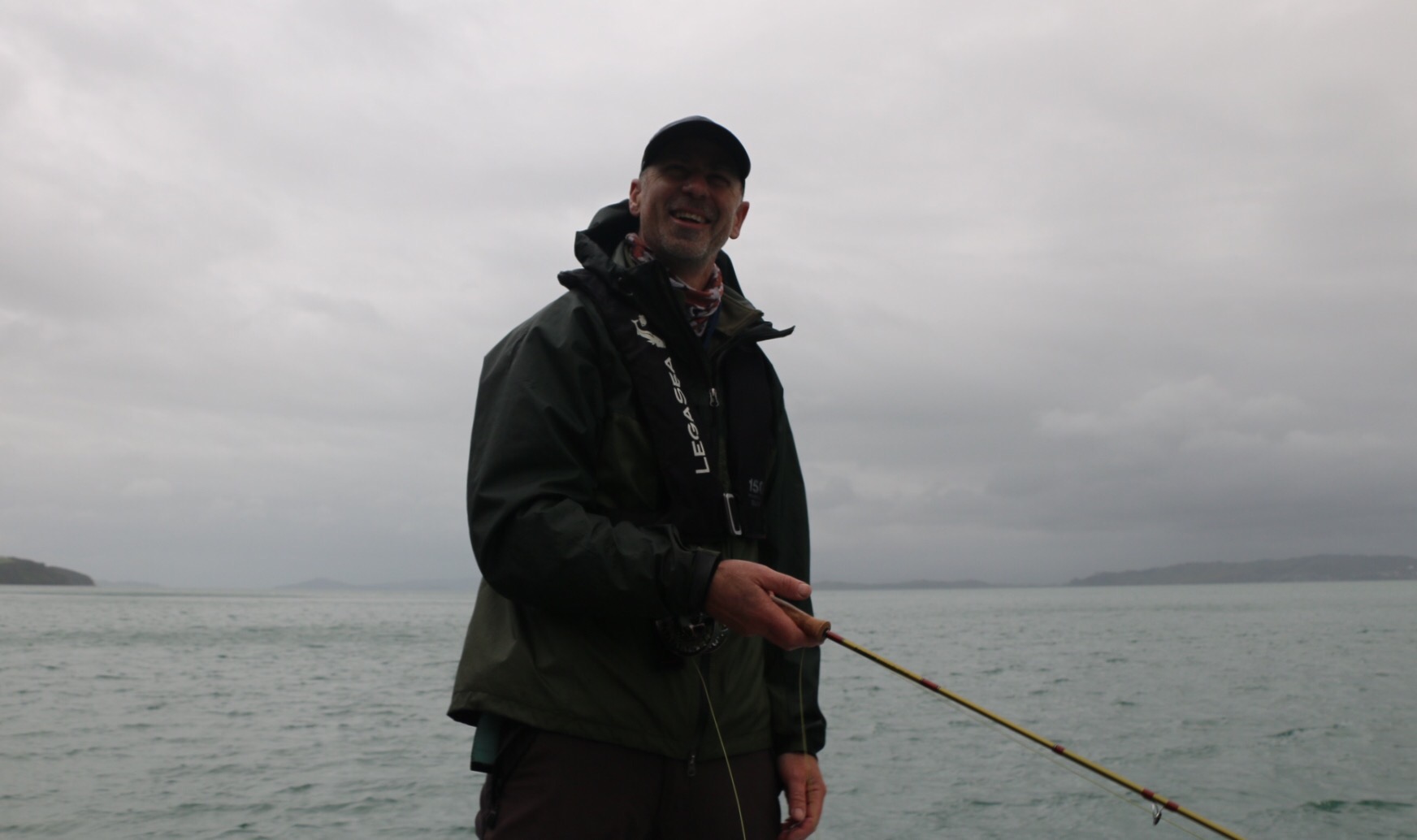
Recently I spent the day with Matt von Sturmer onboard his vessel Saltfly. He was hosting Josh Hutchins from Aussie Fly Fisher, showing him the amazing winter fishery he has right on his doorstep. The plan was to fish for snapper in really shallow water. “Wafting” flies for savage hit and runs or the complete opposite subtle take being a huge appeal to Matto. Capt. Matto, about as passionate to his fishery as they get.Josh using the last lucky fly hoping the rubber legs are the right tone.
What wasn’t planned was the weather! Saturday dawned with the expected 35kn winds that were set to lash the country. The ferry from Half Moon bay to Waiheke was bumpy enough without having to jump on a smaller boat to throw flies for the day. The cats got the cream the day prior. A nice bluebird winters day gave way to horrid conditions the following day.
This is where knowledge of a local guide who fishes their own waters almost daily in all conditions is invaluable. Add to that the safety protocols in place to operate in a professional manor and you’re onto a winner. Despite passing through some rough passages of water Matto had us fishing in areas that we could cope with easily between the frequent gusts. Such a great inshore opponent. And delicious!
While the day didn’t herald any of the bigger specimens that make for a great fight in the shallows we caught a dozen or so scrappy fish. The shit talking and catch ups are always welcome, even if Matto and I had to have a few serious moments to discuss safety drills and training as part of our Maritime requirements.
Winter is a great time to sneak out for the odd decent day of fishing but it’s also a time to service gear, prep rigs, tie flies and think about your plan of attack for the coming season.
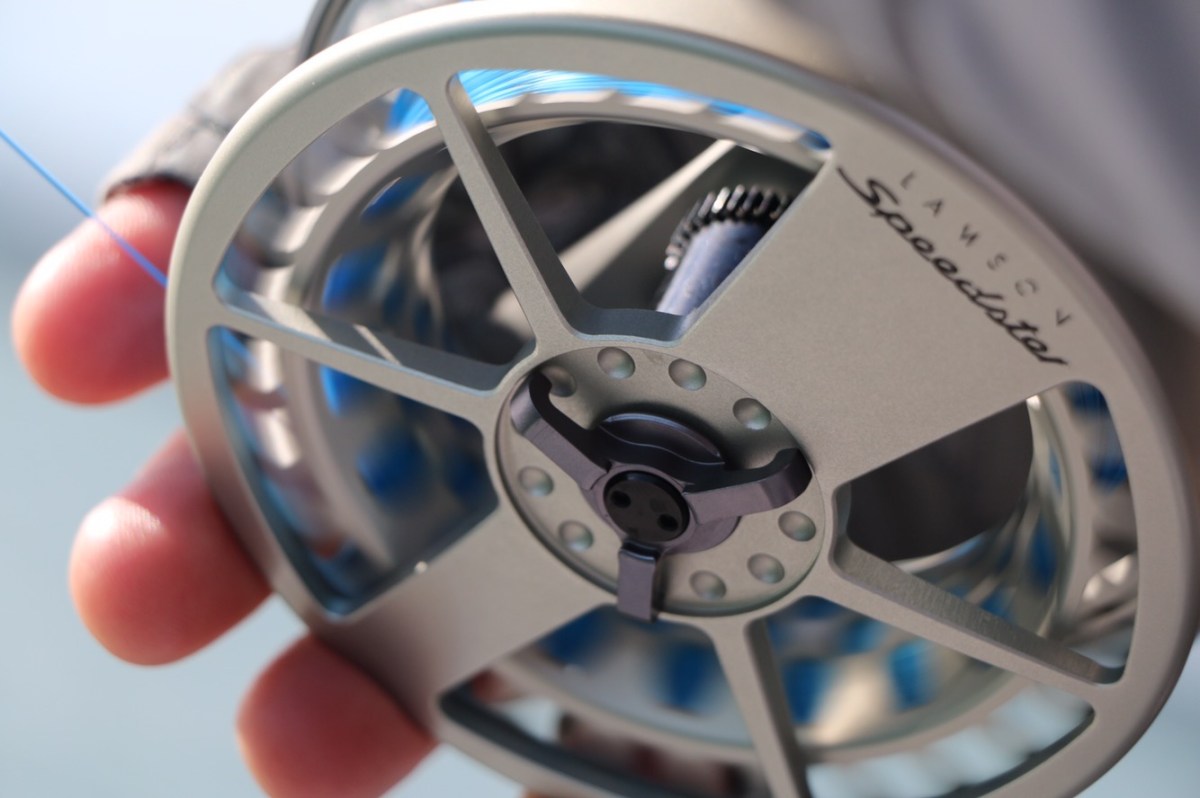
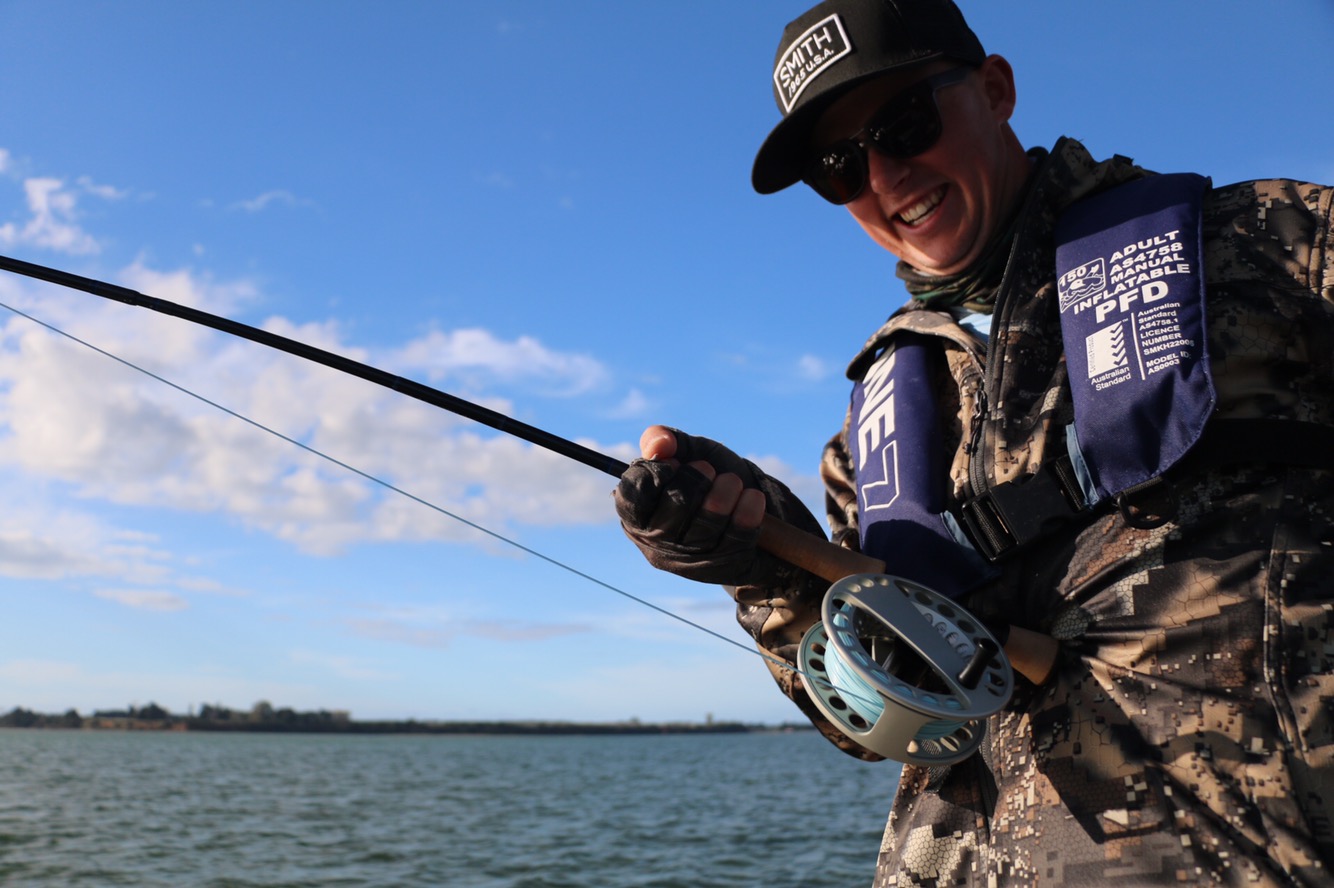
Something that came to light while changing fly lines recently was how many shitty backing to fly line connections I’ve seen. There’s no denying powerful fish need strong connections. Marc Clinch about to hear his backing knot sing.Strong fast runs see the backing knot tested rigorously.
My flats Kingfish assemblies tend to step down from 60lb fine diameter backing to fly line (approx 35lb) and ending with around 20-30lb straight section of fluoro leader. This is to help avoid losing fly lines but also try to prohibit fish carrying excess line around if they bust free (barbless hooks should also get a mention for this reason).
At a pinch you can double your backing and make a doubled Bimini loop. This has twin loops and is better than a single strand which can bite into a fly line.
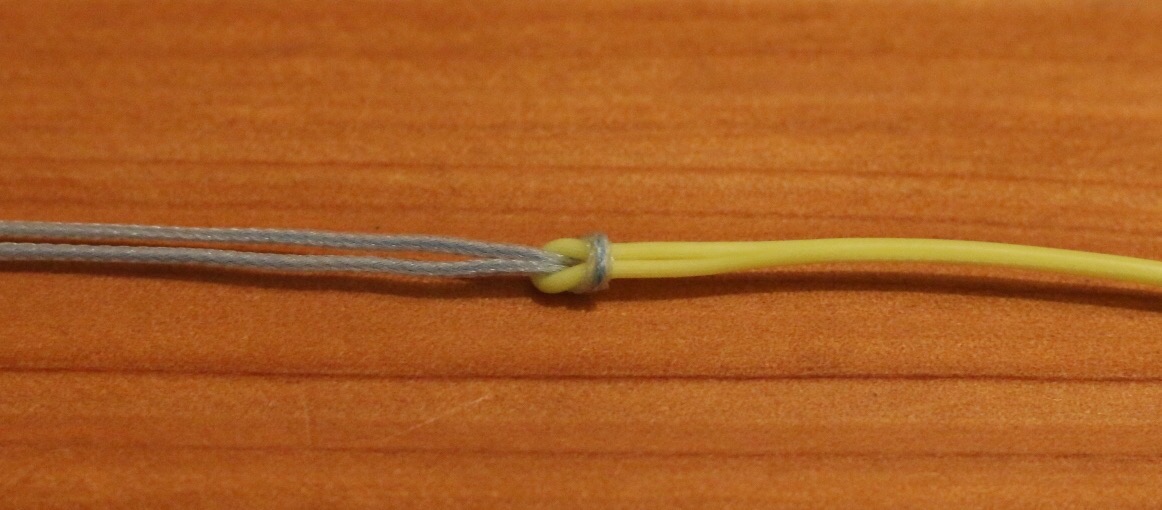
My favourite is to create a sleeve of braided 50lb mono and use this as the load distributor through your loop-loop connection. The steps below should get you underway and have more confidence in your connection as it sings out the guides. All the tools you need for this connection
Cut a length of braided mono to make a loop big enough to pass your reel through – this makes changing lines easier if you need.Braided loop should be big enough to pass reel through.
Pass backing through braided mono and leave tag end of 50cm
Thread whip one end of mono. Give it a light dab of super glue and roll in fingers to absorb.
Smooth the mono tightly to the other end, ensuring no slack. Repeat whipping/gluing.
Now double the backing up to form your mono sleeve loop. Make the two whipped ends slightly offset – this should help taper the transition of finished knot.
Plait braid back down onto the mono whipped tag ends. Start far enough up from mono ends to create a 4-5cm plait.
Once you reach mono start half hitching, using opposing hitches. These should start to trap the braided mono.
Work hitches down until you’ve covered previous whipping and secure tag with a rizutto finish.
Cover knot with Loon soft head or similar flexible glue. Tied, glued and dried. Ready for a beating.
Allow to fully dry, nothing worse than winding fly line on and discovering you’ve glued it to your backing knot!
Attach fly line by passing backing loop fully through fly line loop then passing reel through large backing loop. Finished connection should resemble a reef knot. Finished loop to loop connection.
Some useful knot links.
Plait – https://youtu.be/2uUWS7dzOn0 NB: stop at 1:20 mark, don’t use finishing knot in video. Start hitching instead.
That’s a wrap. A term used to signify the closure of an event or season. But since Tauranga’s season doesn’t seem to be quite over I’ll apply the phrase to those pesky tail wraps some larger fly patterns tend to acquire.
Over time my top fly patterns have been developed and adjusted to suit the many factors required in everyday fishing. To me durability, practicality, castibility and some other key assets are always top of the pile.
Tail wraps are a (insert cuss word here). While they can’t always be avoided they can be mitigated during the tying process and best avoided with some slick casting.
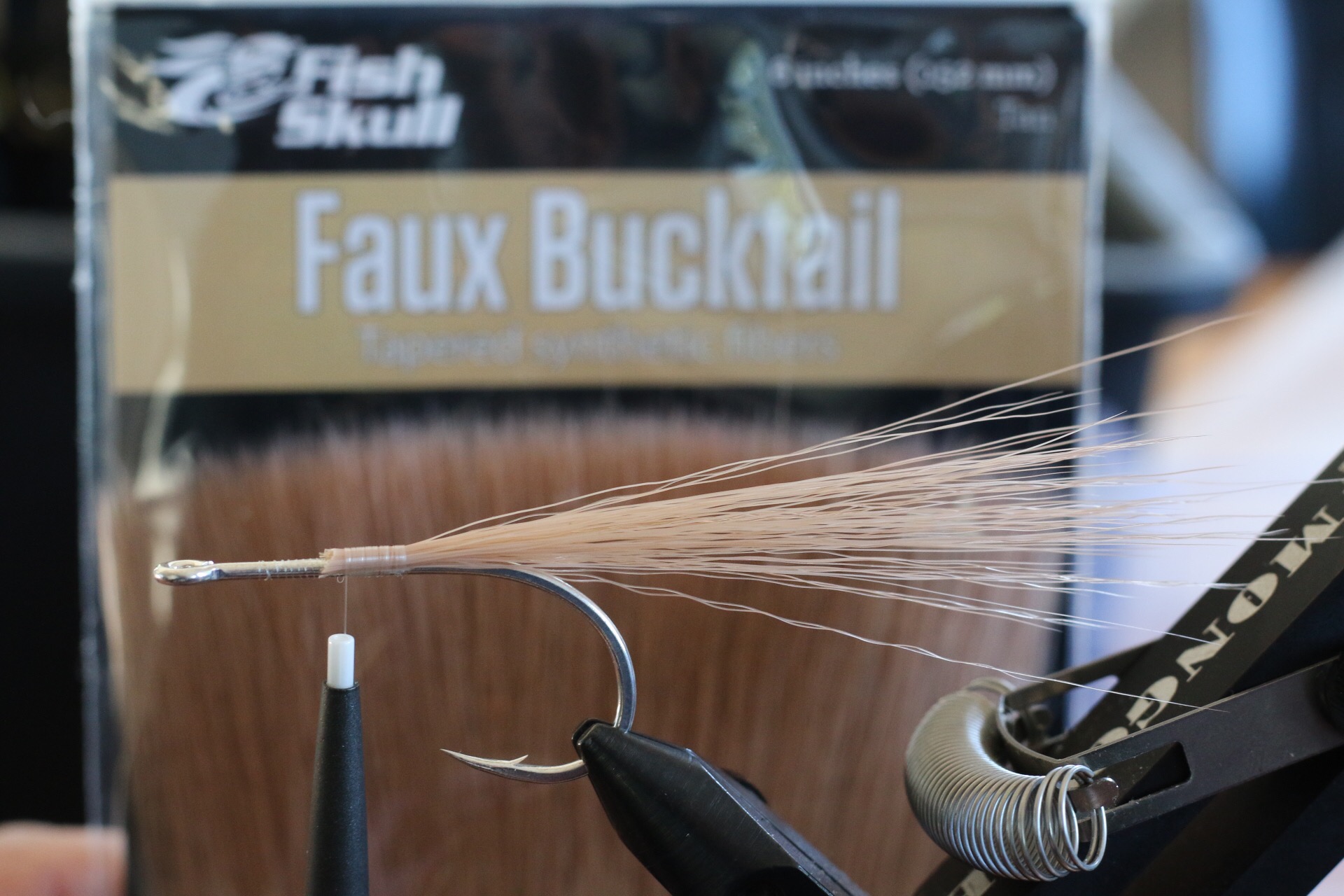
Something I’ve found key is to build an internal core that will support the more supple fibers without compromising movement. Faux Bucktail is now a firm favourite for this task. A few thread wraps tucked under the fibers near the bend or solely around the fibers themselves adds to the value. Faux Bucktail, the best thing since sliced breadSF fibers perched upon Faux Bucktail ready for more layers
Building heads that hold their shape also allows the fly to keep itself in order. Anything more than a third of total length may prohibit action so be mindful of this and also not restricting the gape of the hook.
I’ve been a huge fan of Loon Soft Head for this purpose for a long time, recently I’ve tried Plastidip also and found this to be just as good. Although it takes a while to prep and better suits finer material. A light head of Senyos Lazer Dub will be enough to cover the other synthetics nicely and bind the adhesive better.
The water pushing head and initial air trapped inside the front cone will get the attention of any super predators nearby. Nothing says eat me like the noise of a bubble trail. Masked eye and hook ready for a spray
There’s other tricks out there also such as building mono tail guards and using shorter tails so it is really a case of finding what suits your fly. Another quirky trick I picked up while twiddling a fly cruising the flats is the dreadlock theory. As most of the flies I tie and use are synthetic they can be twisted at the tip to lock the fibers up a little and stop wayward hook wrapsDreadlock the tips, great time killer while on the waterFinished product ready to swim
With all these things now going in your favor it leaves more time for fishing and less time untangling or even worse throwing twisted, matted flies away.
The countdown is on for the new season now, although there’s still a few to be caught between low pressure systems. With 16c water and lots of bait it comes as no surprise there’s still a few stragglers about.
Short edit of some Autumn salt fly action in Tauranga Harbour, New Zealand
Sorry for the lack of posts lately. Seems adding another child to the litter makes time slip away all to easily. We’re winding the season down now with water temps dropping almost half a degree daily at some stages. The fishing has been really good with most clients scoring multiple fish and having shots at plenty more.
I’ve knocked a clip together of some of the last 6 weeks highlights. From epic sunrises to masses of tailing kingfish and the hectic, stubborn fights that follow. Please excuse some of the shaky camera work – guiding, filming and operating a vessel at the same time all present their own challenges!
Lastly, if you want to be apart of this next season then drop me an email here. I look forward to hearing from you.









 Taurangas only local saltwater flyfishing guide.