Tagging Stingrays – Helen Cadwallader

Recently I met up with Helen Cadwallader, a PhD student with Waikato University Coastal Research. She is studying the three species of Stingray commonly found in Tauranga Harbour, with particular interest in the Short Tail Blacks – Dasyatis brevicaudata. It is these Rays that the Yellowtail Kingfish cruise alongside and use to ambush prey. After a couple of years of emails and phone calls it was good to finally meet Helen and see how she goes about her research.
Having just welcomed a newborn into the world not much more than 24 hours prior it was a good excuse to get our 2.5 year old and his mate outside for an activity. As with anything involving animals there can be a fair bit of patience required, the group being buzzed by a few Rays before one finally committed and curiosity got the better of her.
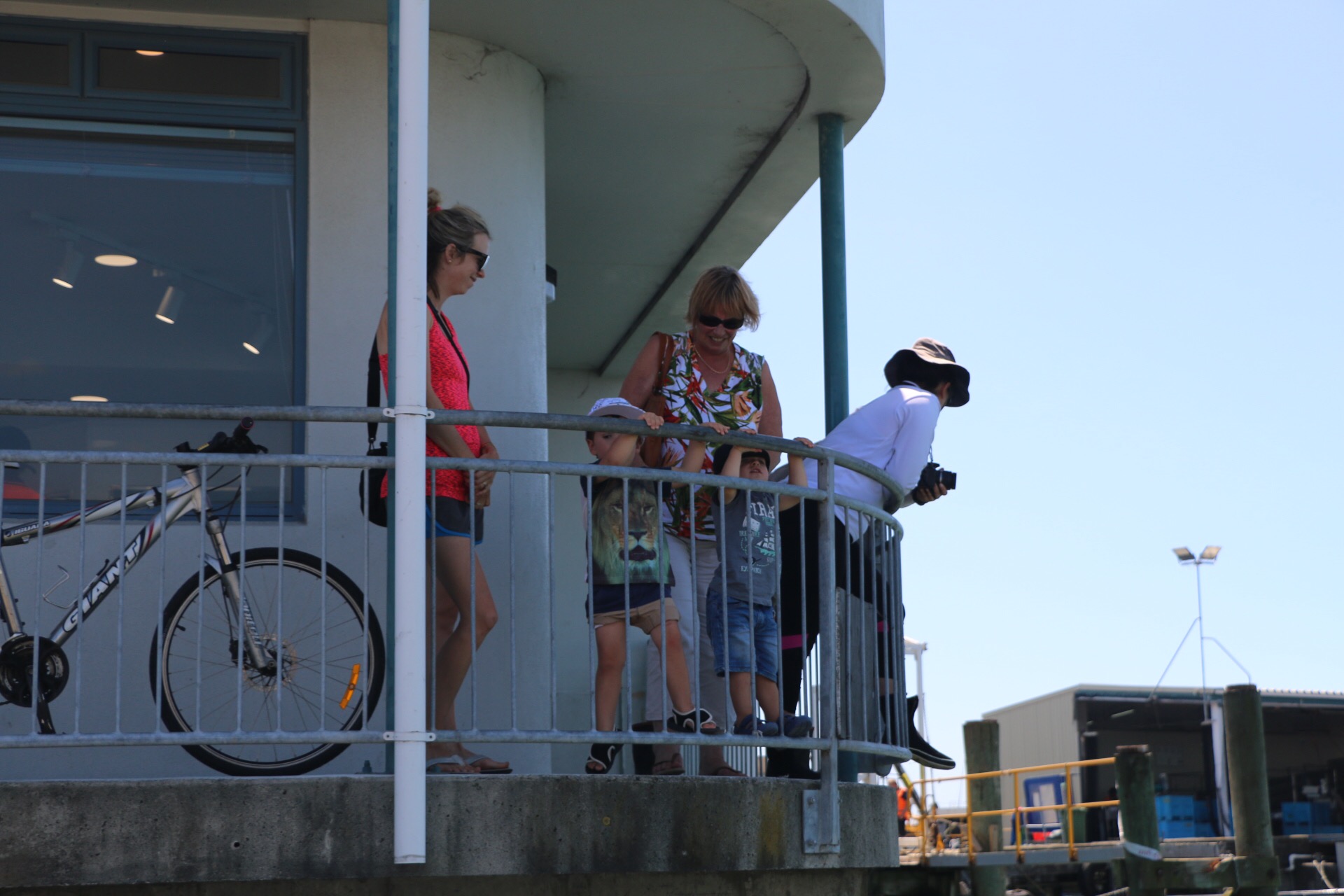
Nearby shop front made a great vantage point for the little ones and researchers
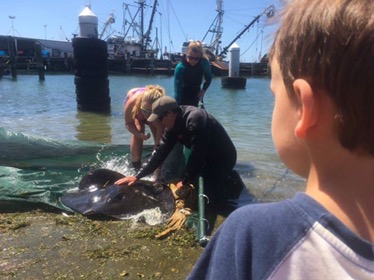
Up close and personal with the boys
They were pretty interested in this sea creature

The trap was simple yet effective, a large piece of shade cloth with two aluminum poles each side sat in a foot of water. A fish frame placed in the middle acted as bait and the surrounding water was scented with scraps thrown about. The boat ramp utilized is home to some commercial fishing vessels and consequently the area is a hive of fish life. Once a Ray plucks up the courage to have a go at the bait it is slid up the ramp into very shallow water and the team get to work.
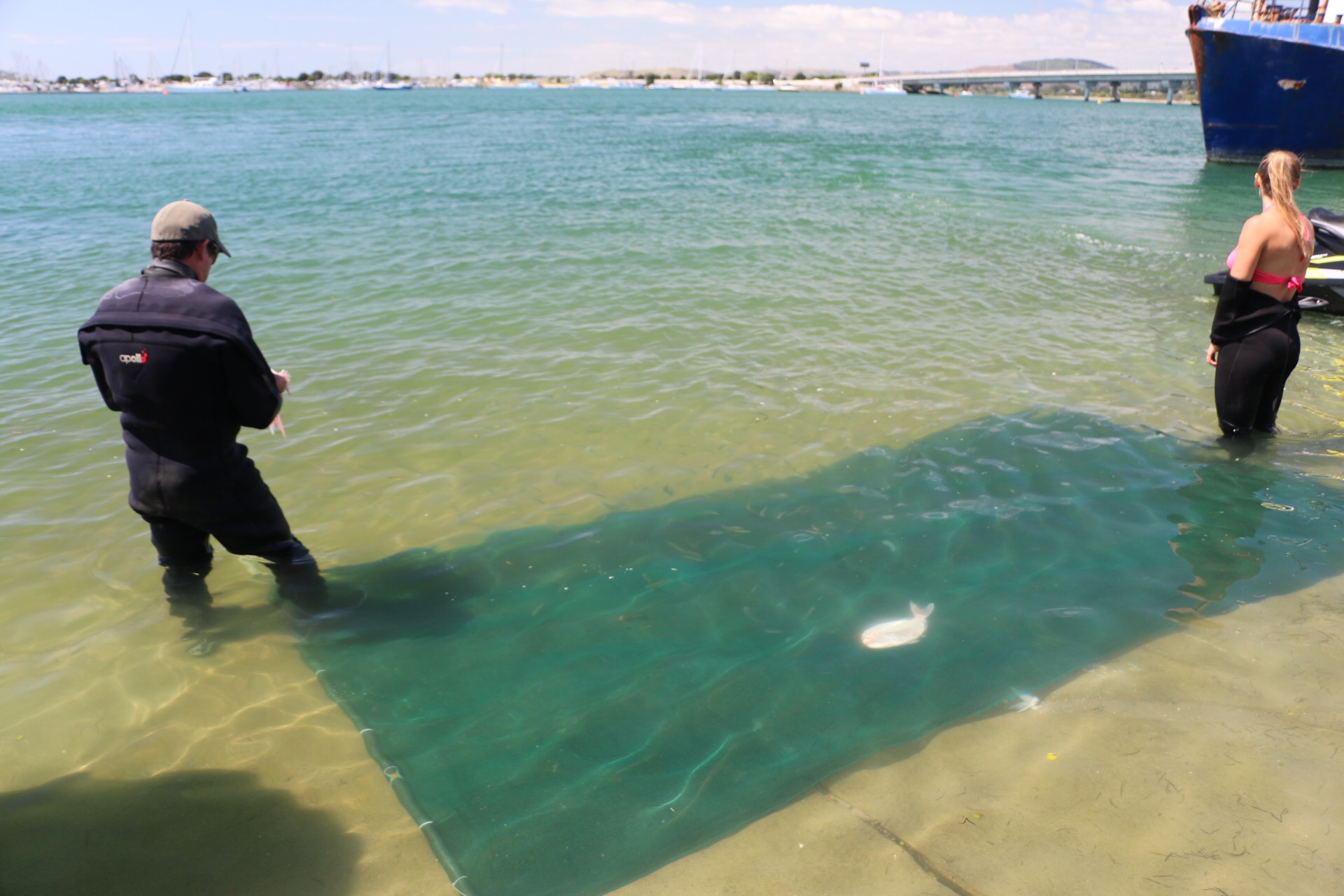
Ready and waiting at the trap
Bait and baitfish. Snapper frames were pick of the day.
Cruiser just out of reach

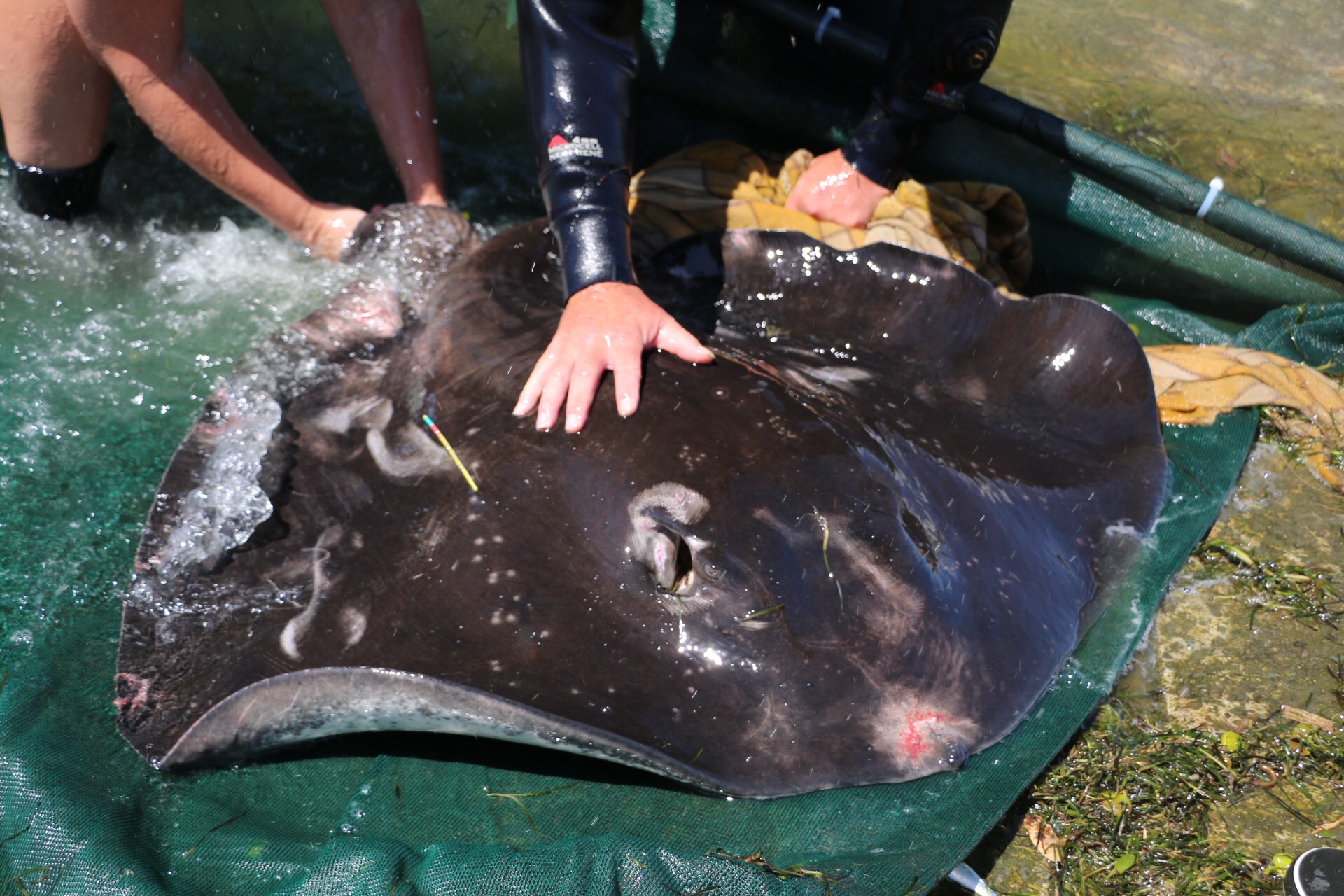
A heavy wet blanket is used to wrap the tail and then held securely by one person as the rest take photos, record data and insert tags. The tag used is a modified dart tag similar to our Kingfish tags in use – the one exception being two individual coloured ID bands at the top. Also used is a coloured plastic disc tag, essentially three different ID colours used for later visual identification.
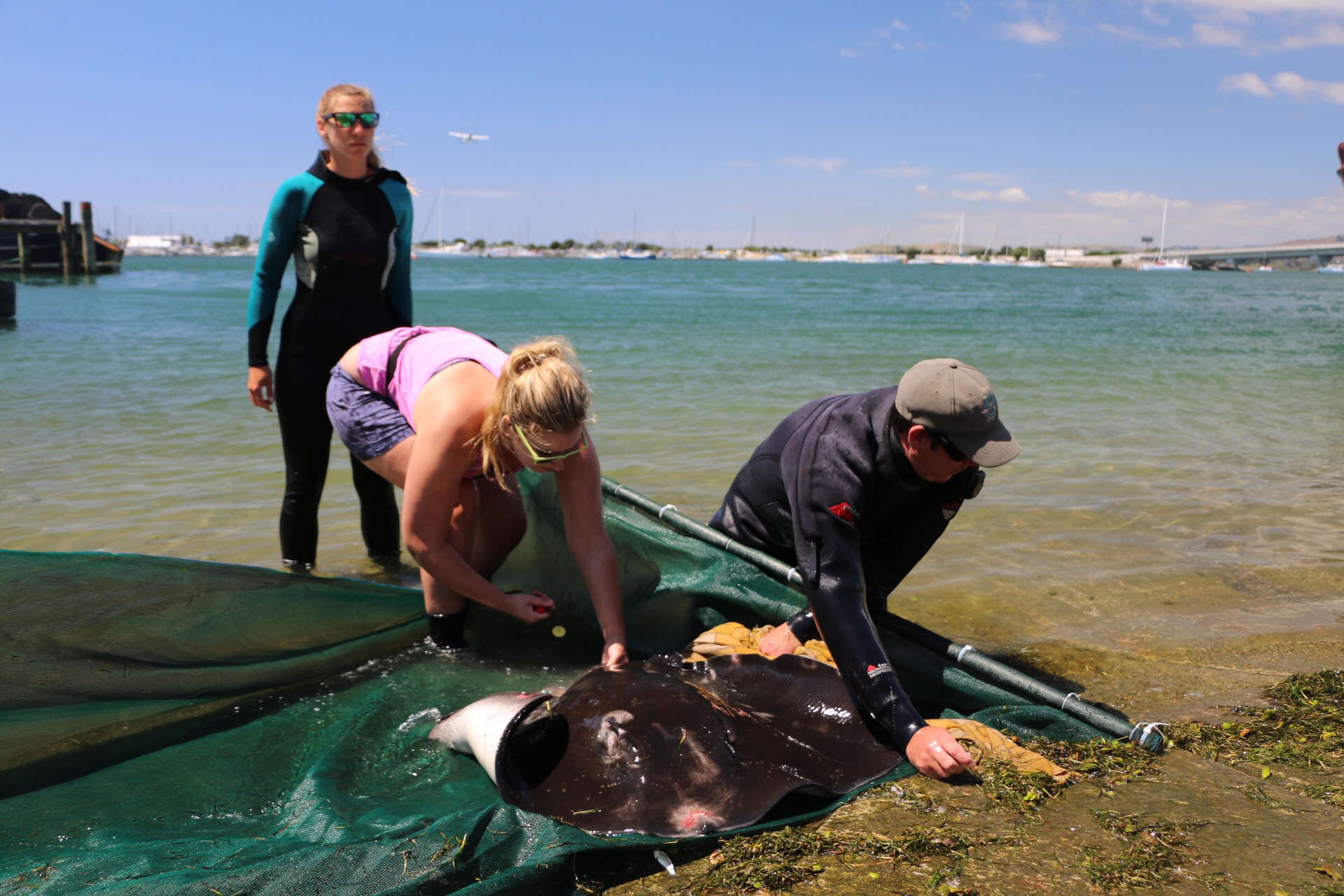
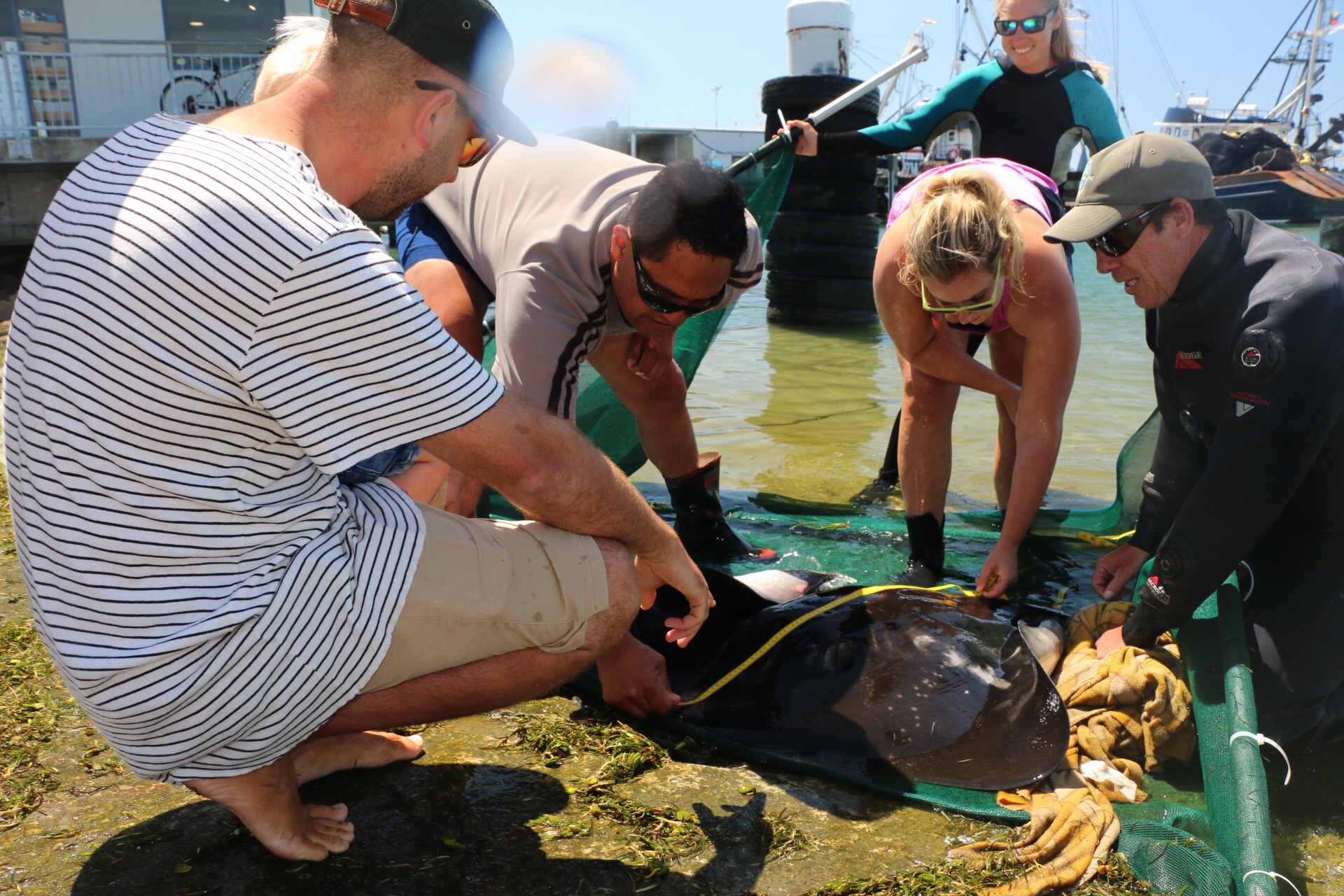
Securing the tail prior to tagging
Tags going in
Quick measurements and photographic details of markings

The professional team have the whole ordeal completed within a small time frame ensuring minimal stress to the fish and zero harm – aside from  some small pieces of jewelry to swim away with and some visible mating scars from earlier. Once all data has been recorded all that is left to do is name the Ray. This one aptly named Margot, in honour of our newborn girl.
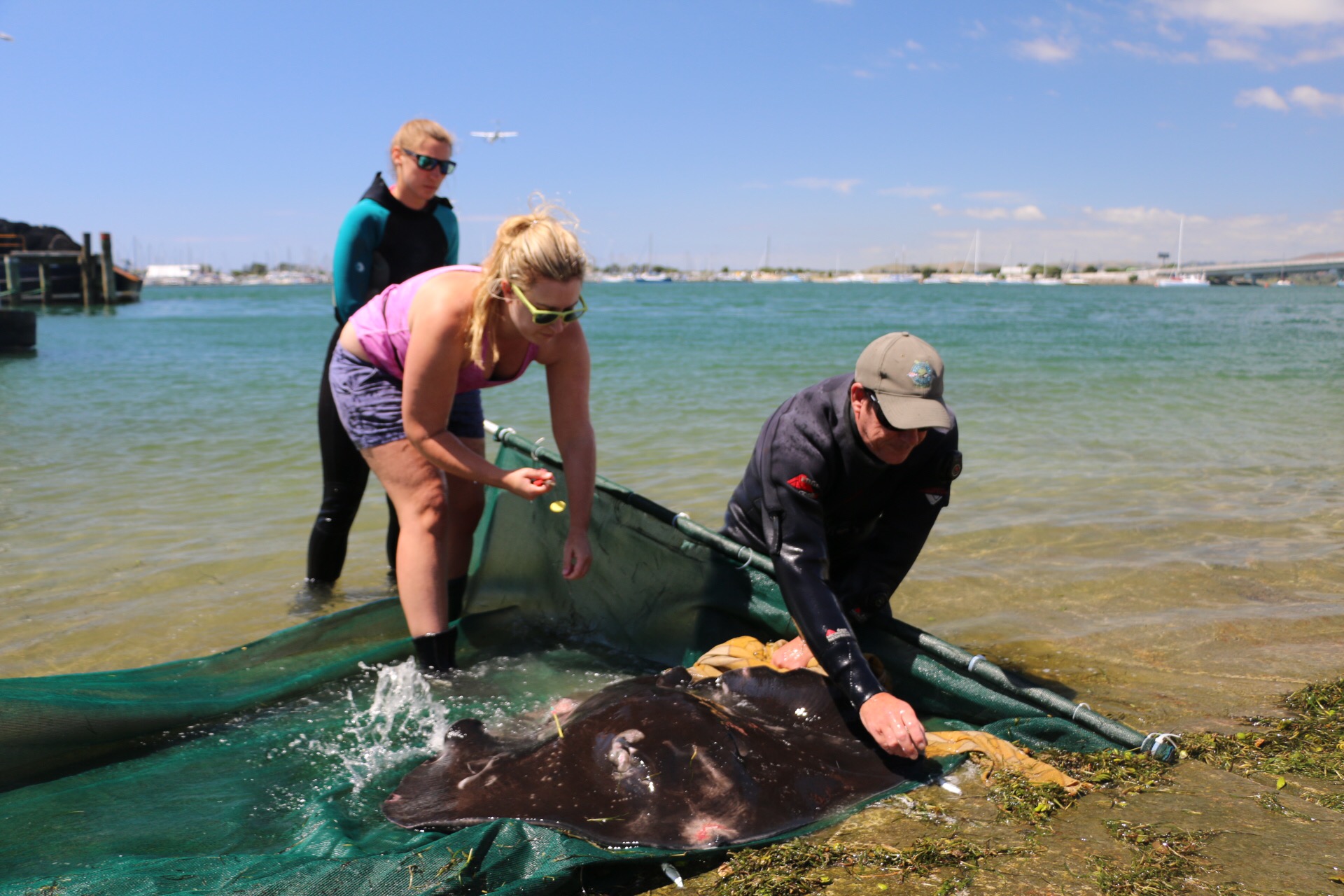
Helen and I continued talking about the rays, discussing feeding habits, behaviors, seasonal movement and concluded that in reality not much is really known about these critters. Whilst in the early stages of its progress Helen already has 18 (possibly a few more now) individually tagged Rays going about their business and showing up here and there. Our first sighting that afternoon was a previously tagged Short Tail happily cruising past, proof they have no impact on the population whilst conducting their research.
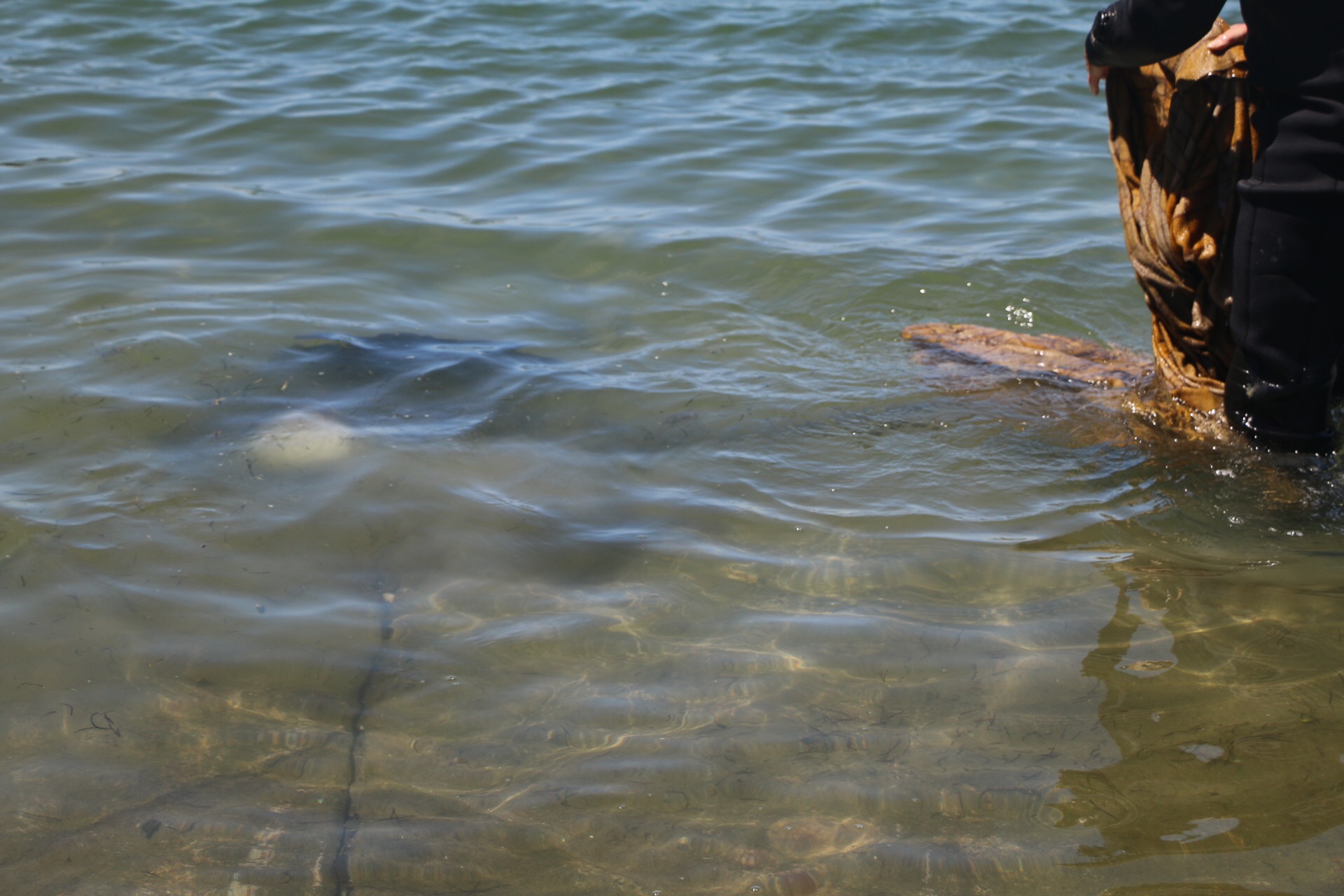
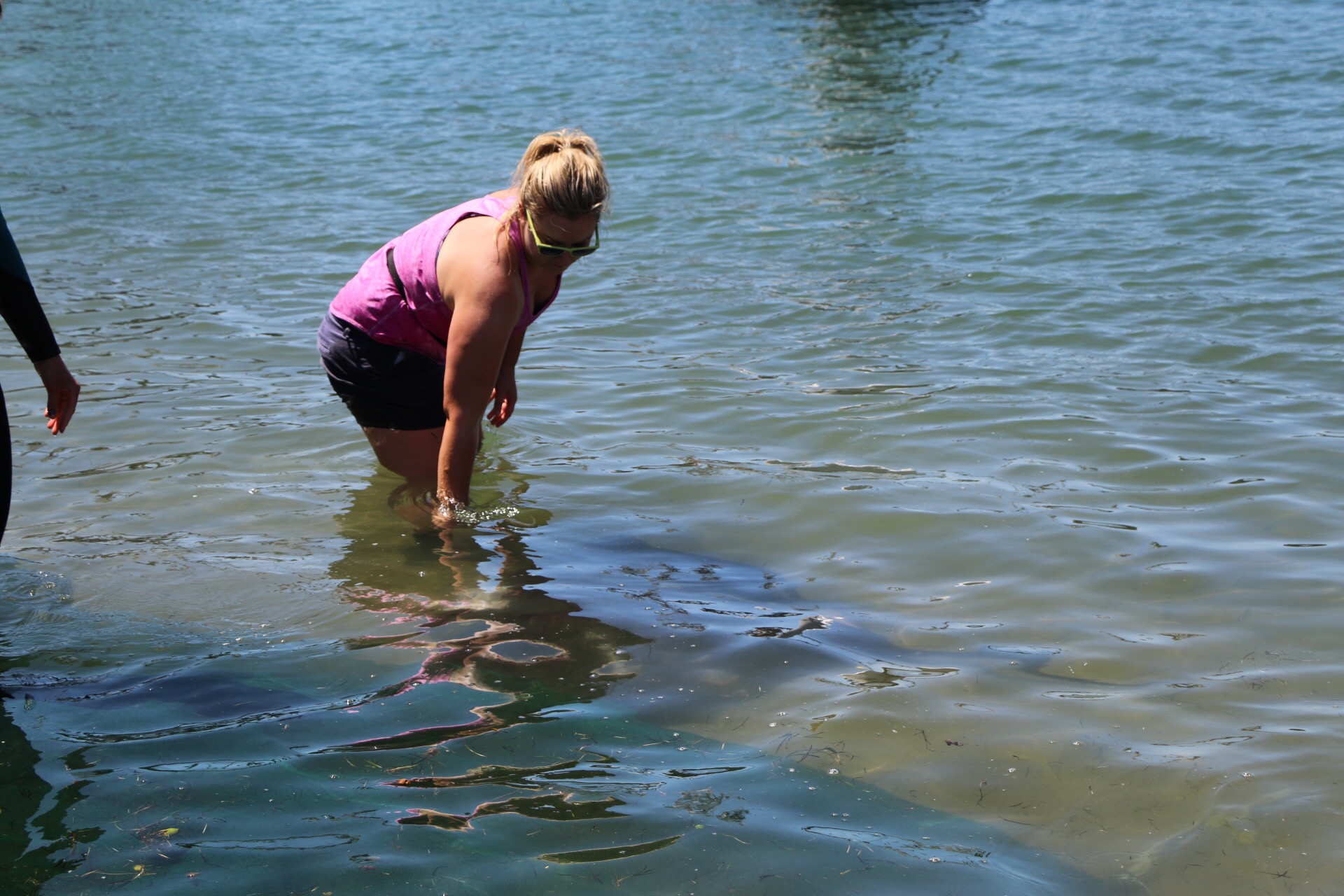
Released to carry on her day
Inquisitive and harmless, but still capable of delivering a nasty blow

I take my hat off to Helen, the unsung hero of Stingrays. She plans to also include the impact of environmental factors in various areas of the harbour and offshore regions, plus a few other topics. Her studies so far have also resulted in helping put an end to some outdated practices that involved killing them for points accrual in some hunting competitions. Shooting fish in a barrel essentially, then dumping the body after proof of kill.

Please go check out the website for this cool project, you can also report any sightings of any tagged Stingrays there.
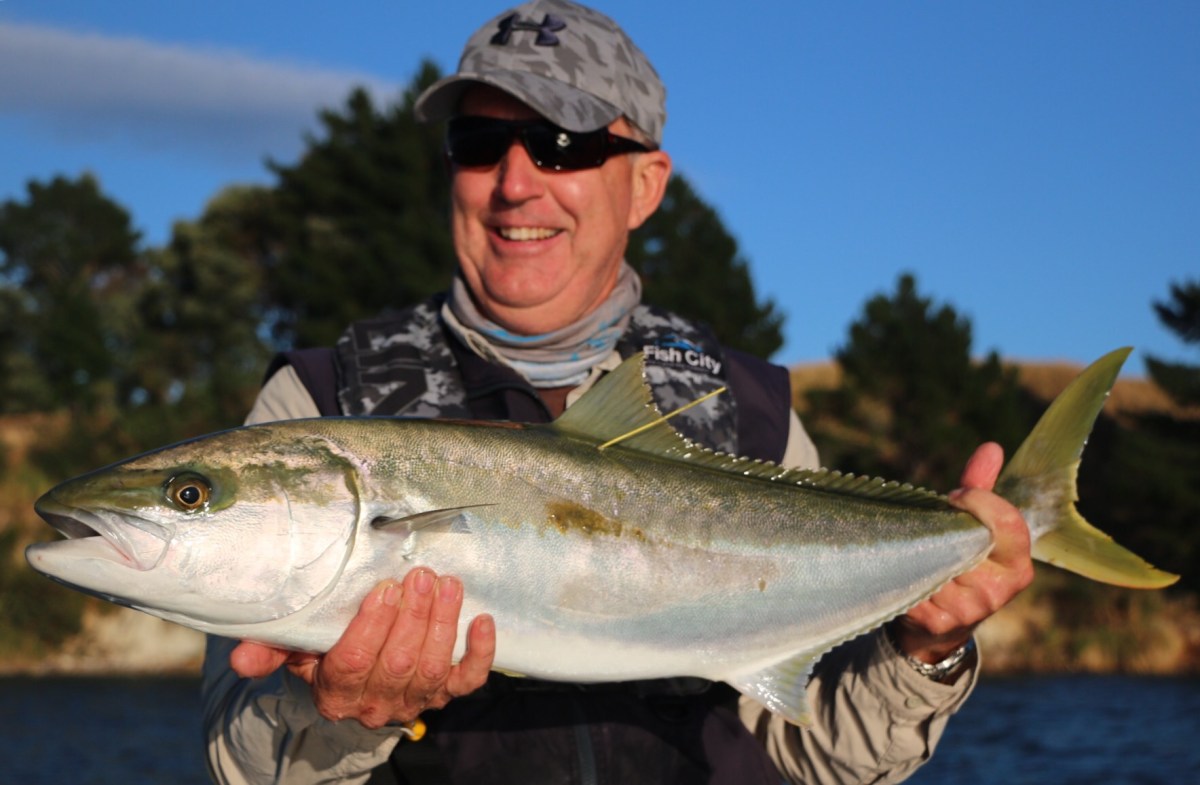
https://www.apexpredator.co.nz/stingray-project

What Summer?

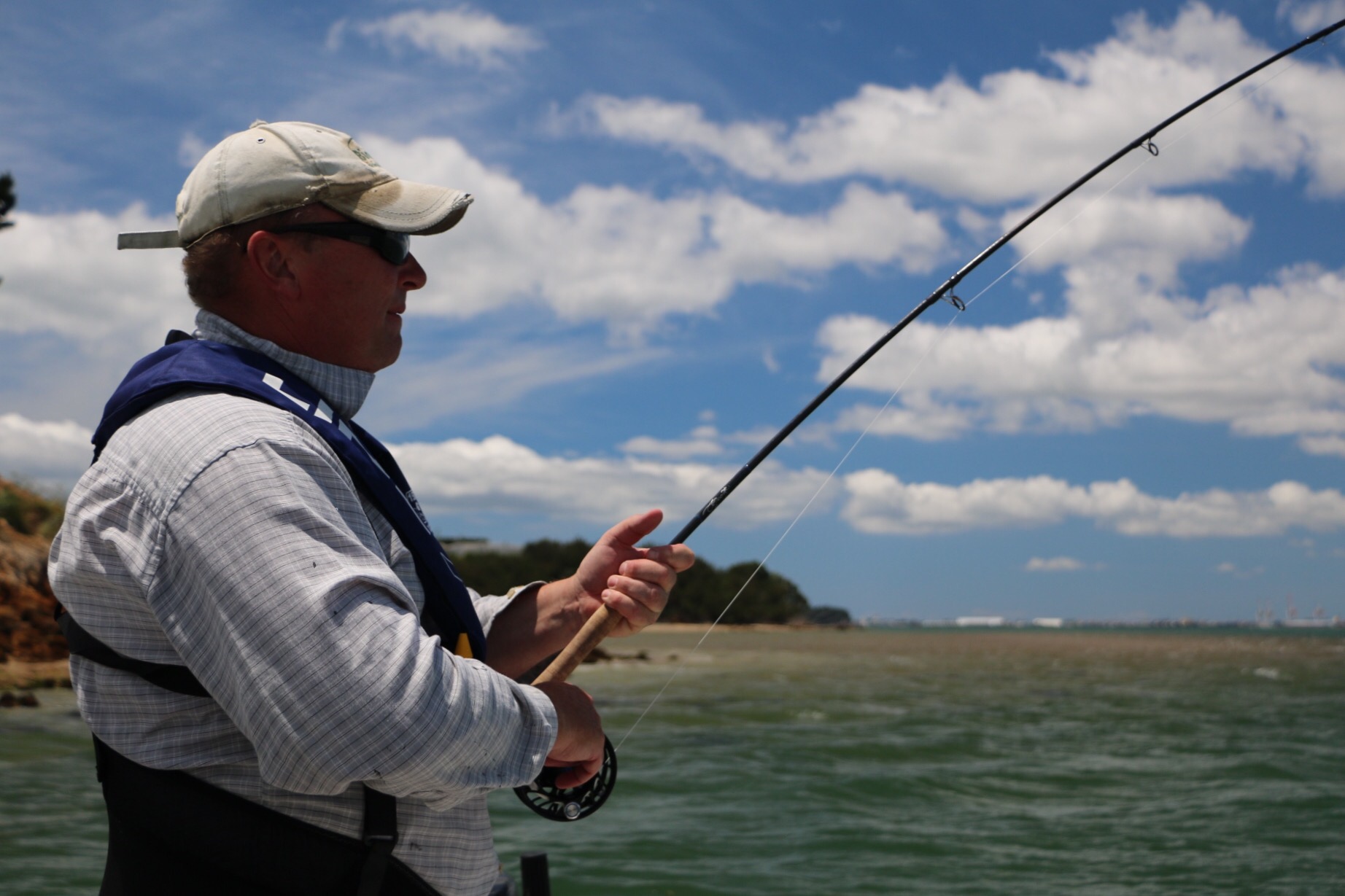
It’s nice to finally be seeing a few more settled days but the persistent winds are still about. We have had to modify and adapt our apporach on these days and at times a no frills approach is best, there’s no point fighting what you can’t control. One trip recently being a case of hanging on for the ride and being rewarded with glass calm water and obliging sighted Kingfish. 

This capped off a week of witnessing clients firsts, all of which taking their first Kingfish on fly. The satisfaction they get is pretty infectious and seeing it all come to fruition is reward in itself. 

For a few weeks the markers seemed to be void of fish at times. Early morning change of tide it’s definitely worth a sniff around a few and we’ve raised a number now to make it part of the focus for the day. Seeing a mob of kings mooching around a pole looking for trouble certainly gets the blood going. It pays to shop around though as some are redundant one day and hot the next. 

Work ups are more prominent in the channels and often tightly packed bait are getting smashed to pieces by the angries. If you get sick of catching Kahawai try flicking a small baitfish fly over the side as you bring it to the boat. The regurgitation of bait can see Kingfish inhale a dead drifted fly during the commotion. Easy fishing and some bigger specimens lurk among the rats. 

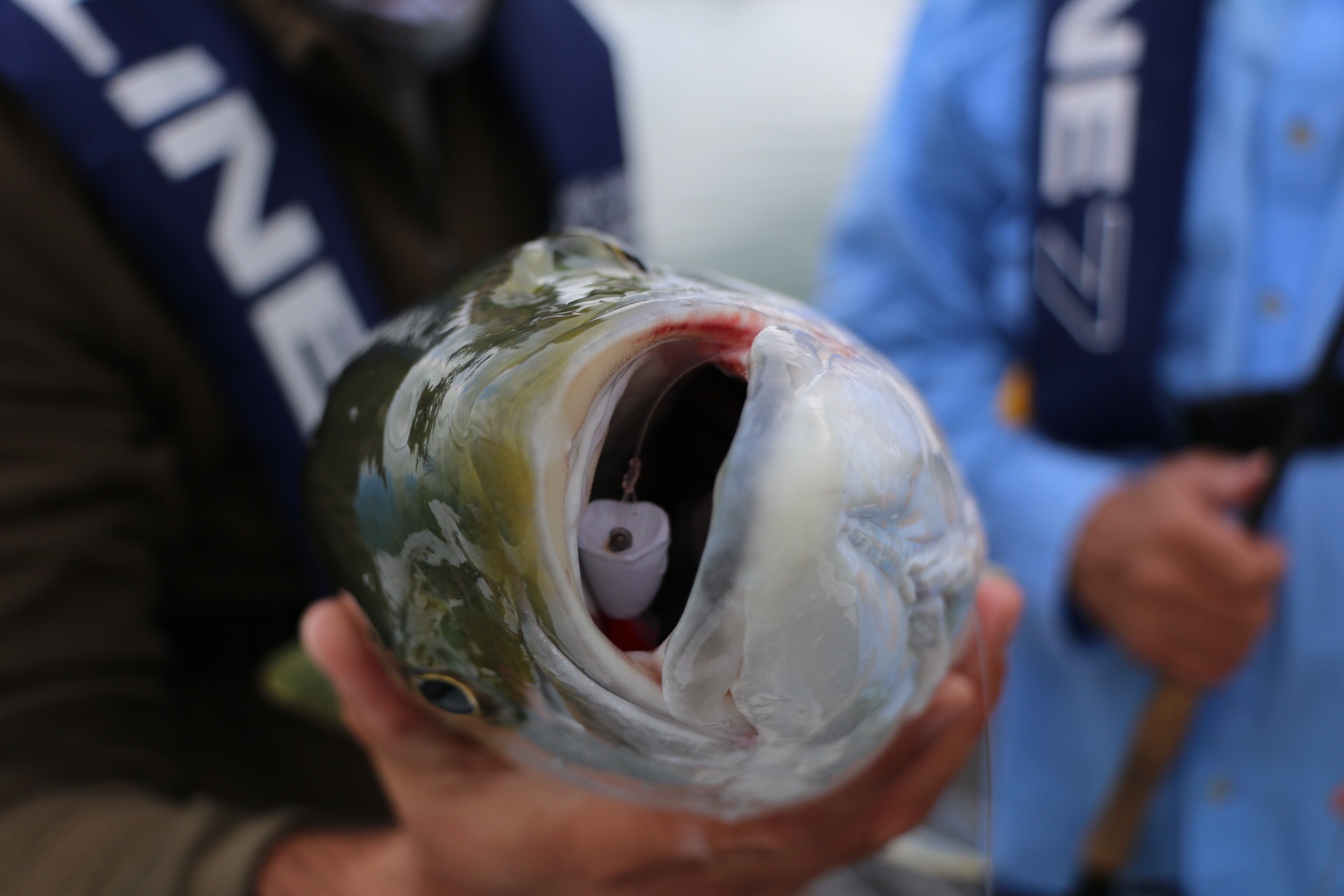
The flats are humming with life, small flounder and piper are the mainstays at the moment although I’m a sucker for topwater action. Vary the retrieves and get that fly swimming nicely, sometimes less is more… Having a kingfishs nose prodding a popper is nothing to sneeze at and a visual that won’t go away in a hurry. 

The Salt fly hook up is just around the corner and registrations open now. Matto from SaltFlyFish and myself are going to be running on the water workshops so if you’d like to be part of one please make contact with us. I have a busy week ahead and am looking forward to showing a few more people around. Today it’s blowing 40 bastards and I’ve cancelled a trip, let’s hope it comes right soon as there’s some spectacular fishing to be had right now. 

Piper, Garfish, Hyporhamphus ihi, Halfbeaks or Ihe

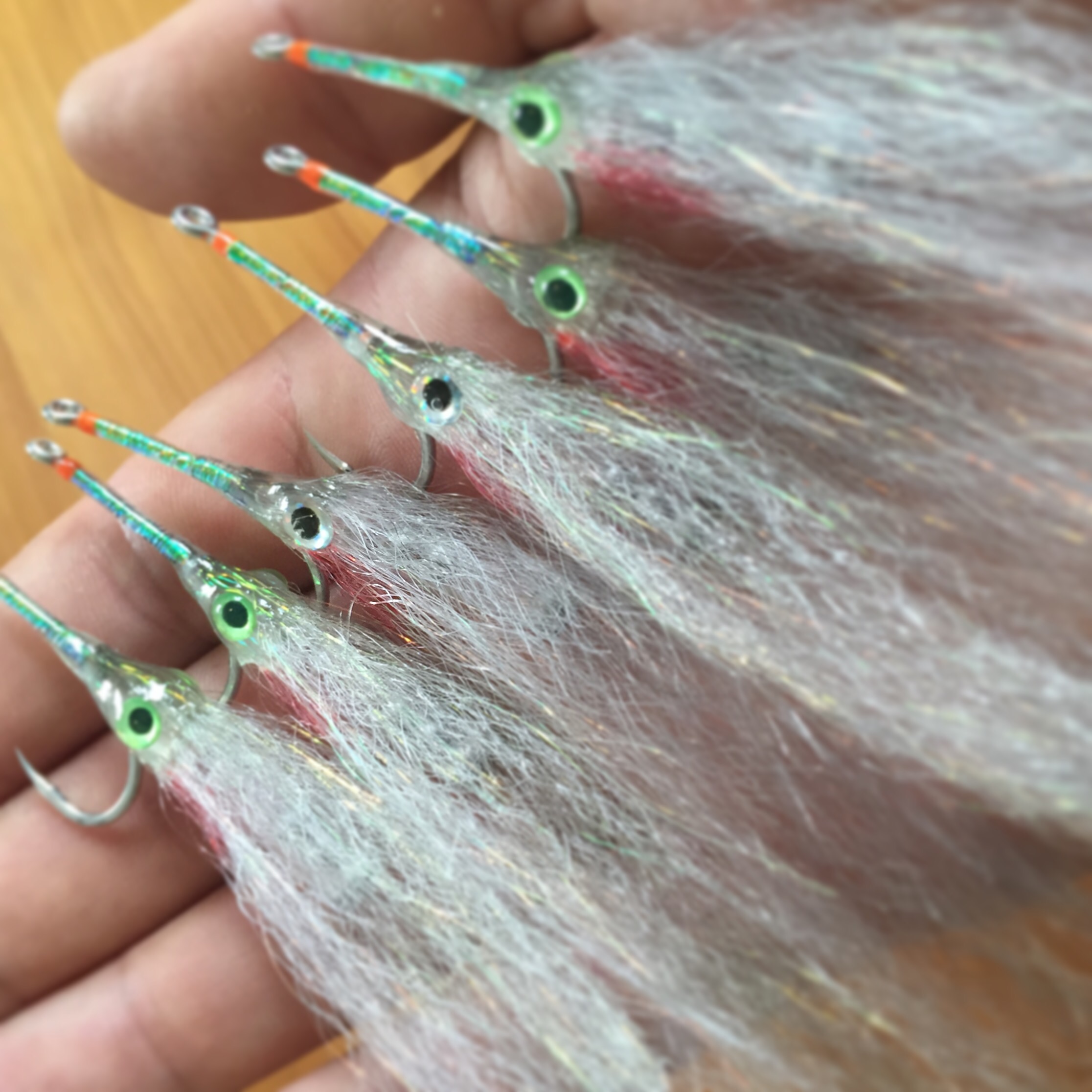
Call it what you want it’s also known as kingfish candy to a lot of sea fisherman. At this time of year we have big numbers of piper seeking refuge around the eel grass (Zostera muelleri) in the shallow sand flats of most New Zealand harbors. 

Our cunning Yellowtail Kingfish are well aware of this and that is why my go to fly normally resembles a piper of some sort. Subtle colour variations are rarely needed but it does pay to carry a few options, not only in colour but also size. With an average size of 200mm but micro or larger sizes always present it pays to mix things up. 

1/0 Mini Pipe

4/0 Olive Piper

The infamous Rattle Pipe

Kingfish tagging program

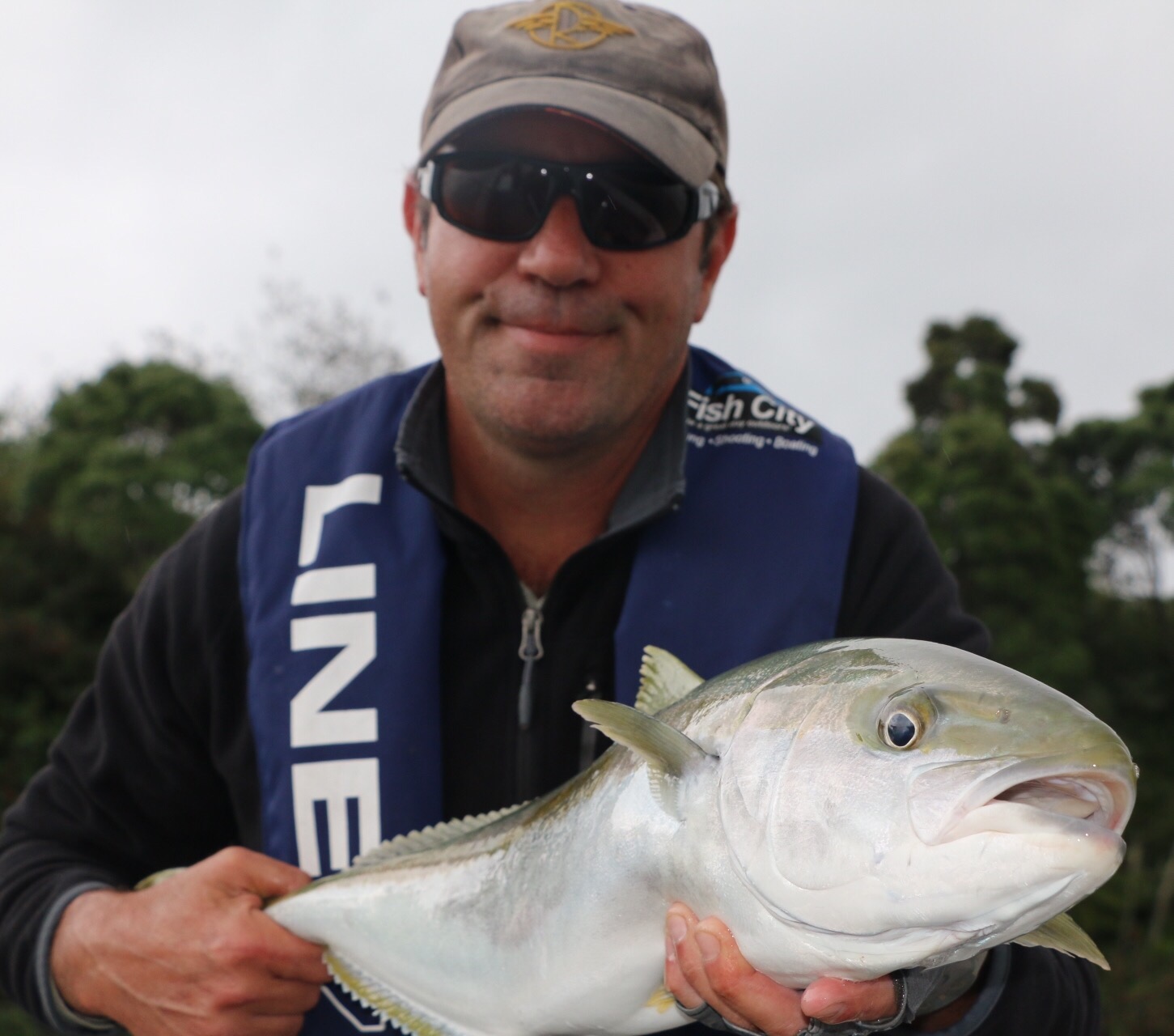
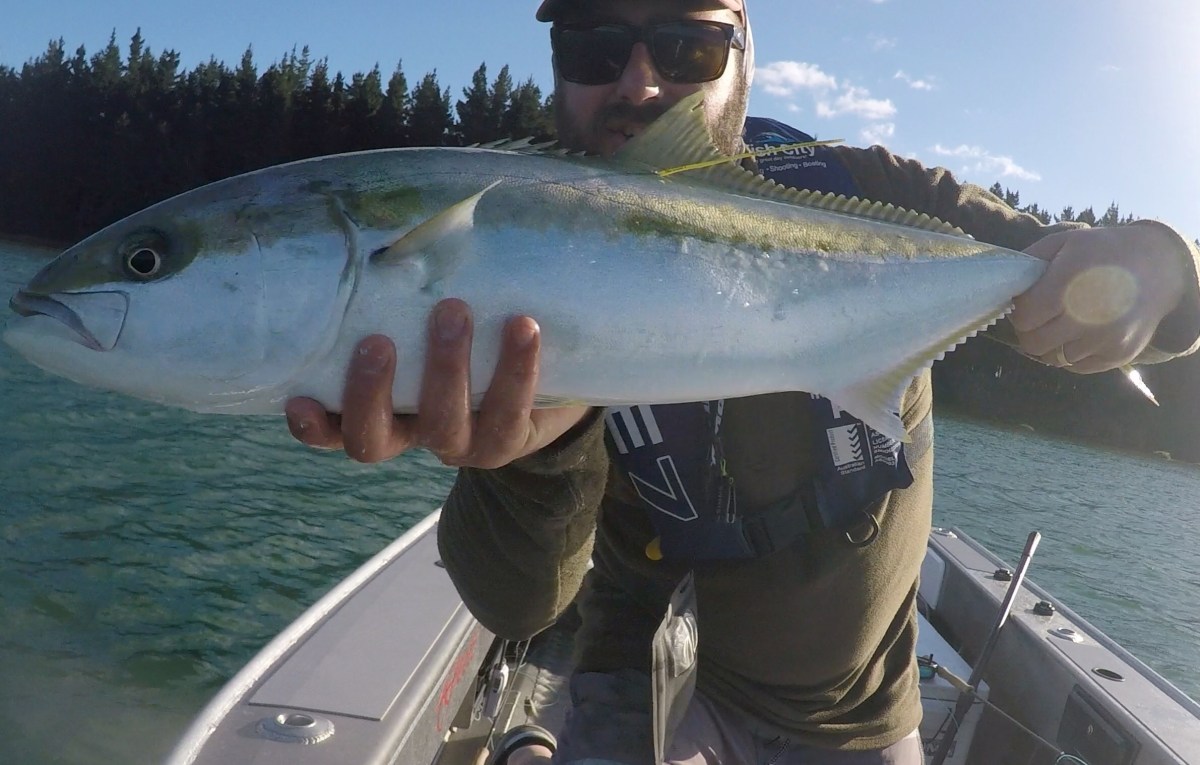
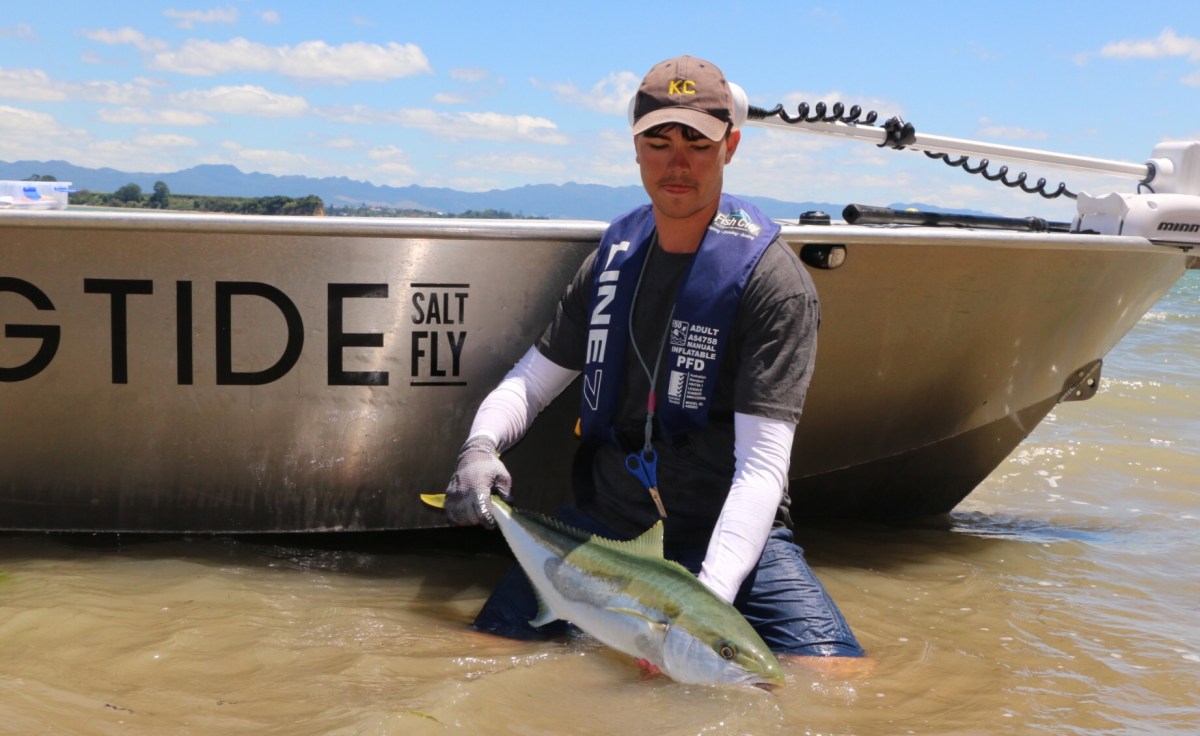
Midway through last season a group of us joined forces with the objective of tagging kingfish caught on fly, in particular the ones found in the skinny water here in New Zealand. 


What started as a curiosity about these creatures habits and desire to protect them and their habitat has now gained the attention of Bluewater Marine Research, New Zealand Sportfishing Council and Legasea. Having the backing and support of these guys gives us a solid platform to work from and collate data as it comes to hand. 


A recapture rate of around 7% gives us insight into the Kingfish movements and growth, already we have had 2 reports back. The most recent having travelled 190km in 160 days with a growth of 4cm over this time. 

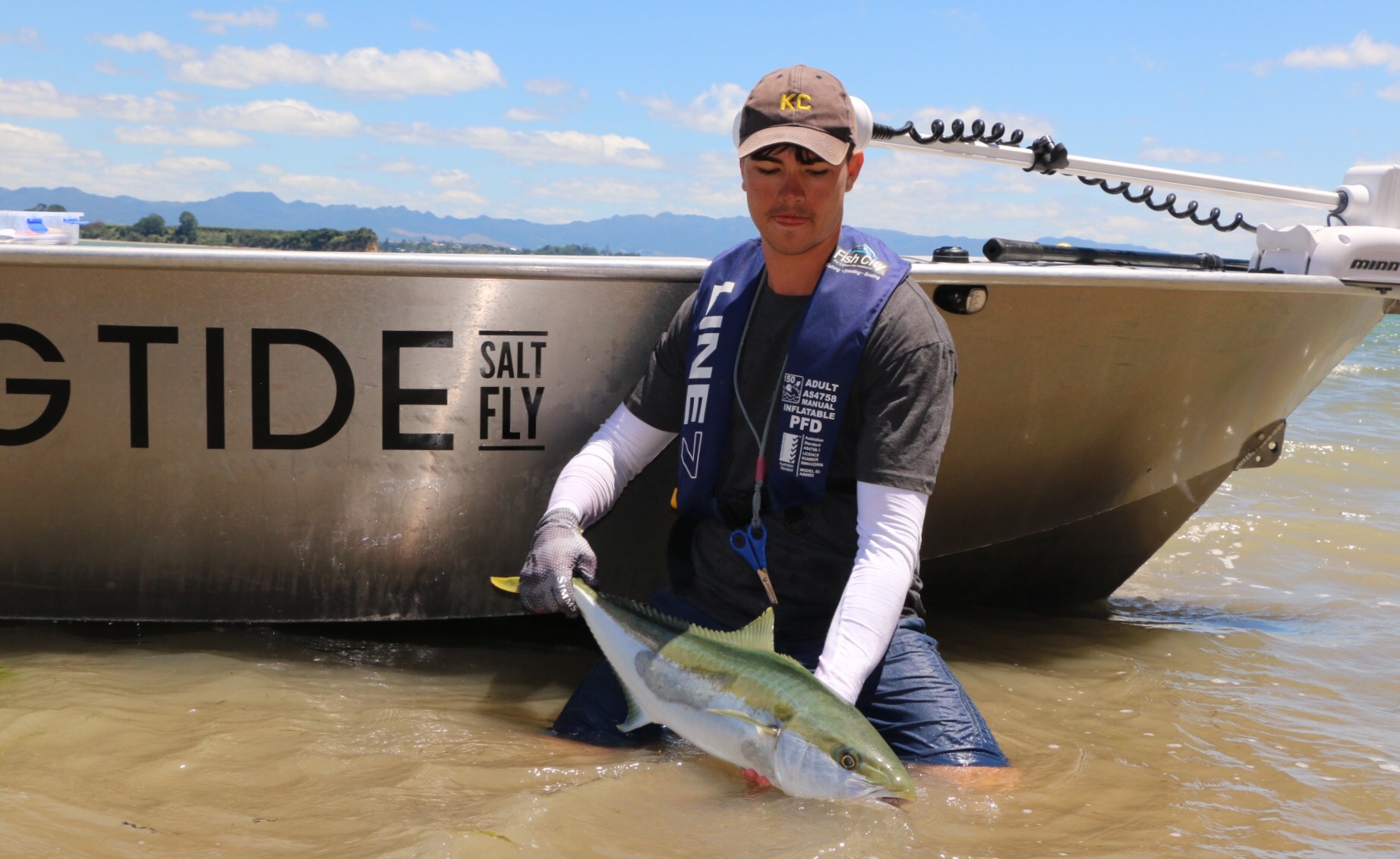
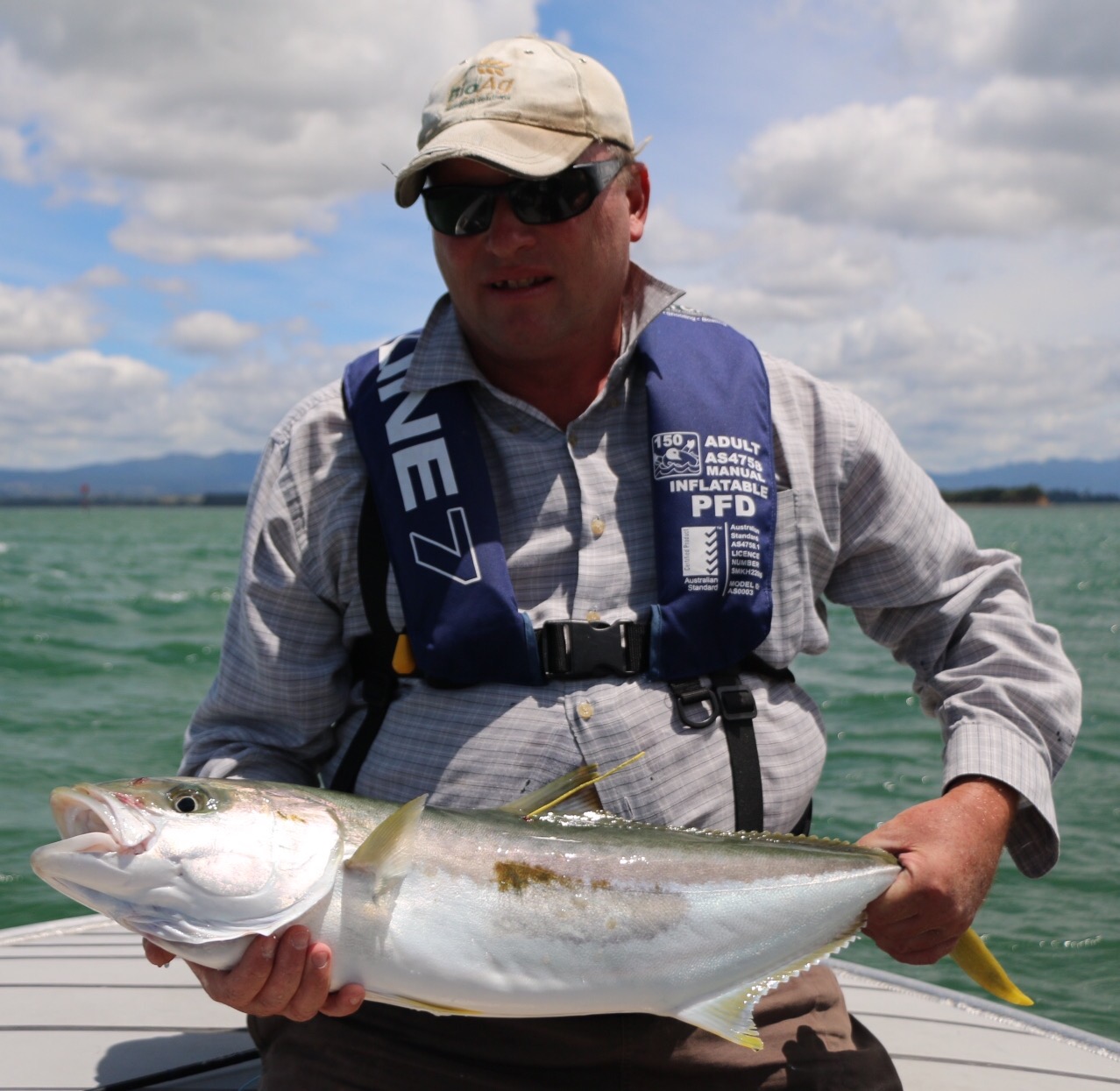
We encourage you to get out there and catch these fish but bear in mind they are a valuable resource for data collection. Please measure nose to fork of tail and release with care. Also record the tag number and send all info to the site provided on each tag – a close up pic of the tag is a good way of getting that info quickly for later transferal. And if you don’t have a tape just lay your rod beside it take a mark and measure later. 
Some points on fish handling:

Use barbless hooks – it’s far easier to release them and less harm 

Net the fish preferably or cradle in the shallows

Keep time out of water to minimum  

Lay on a wet towel on boat decks, use an edge to cover eyes if needed

Keep fight times as quick as possible